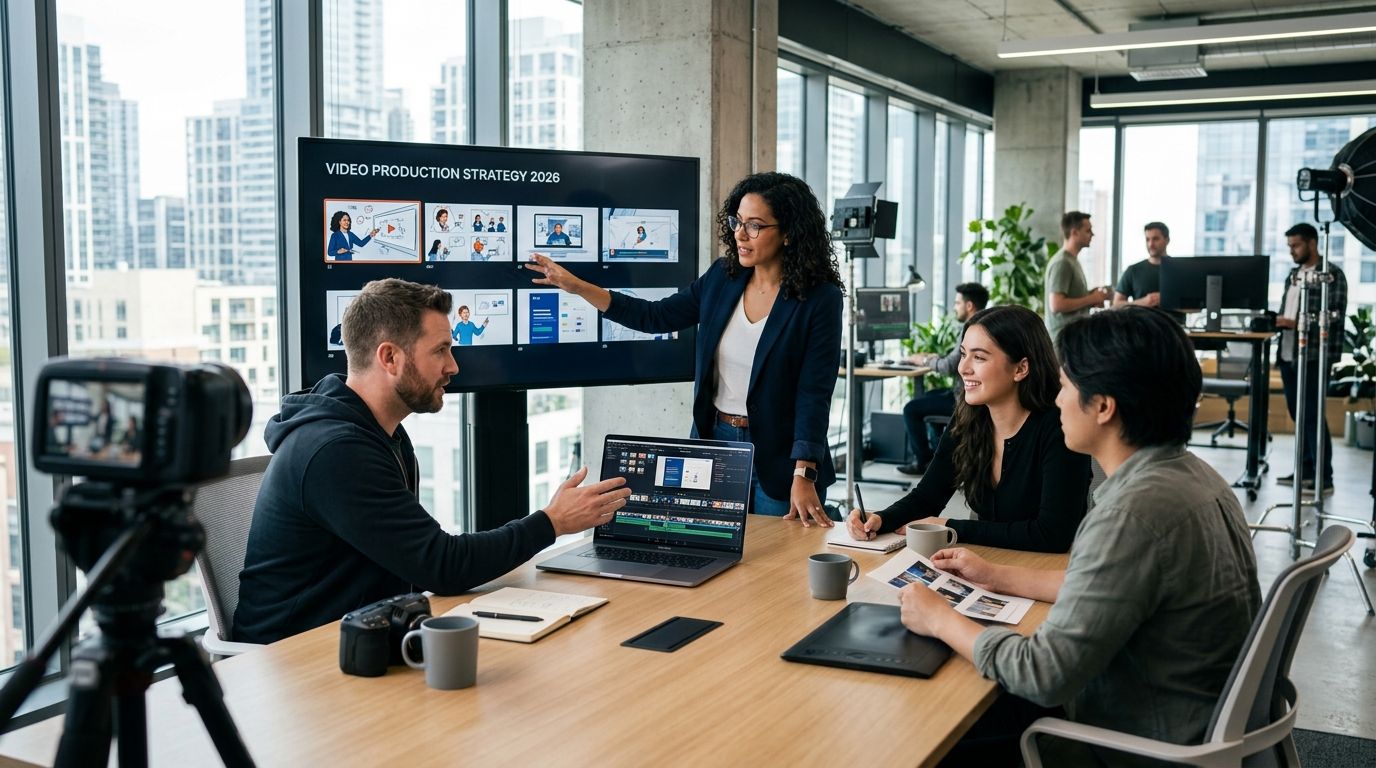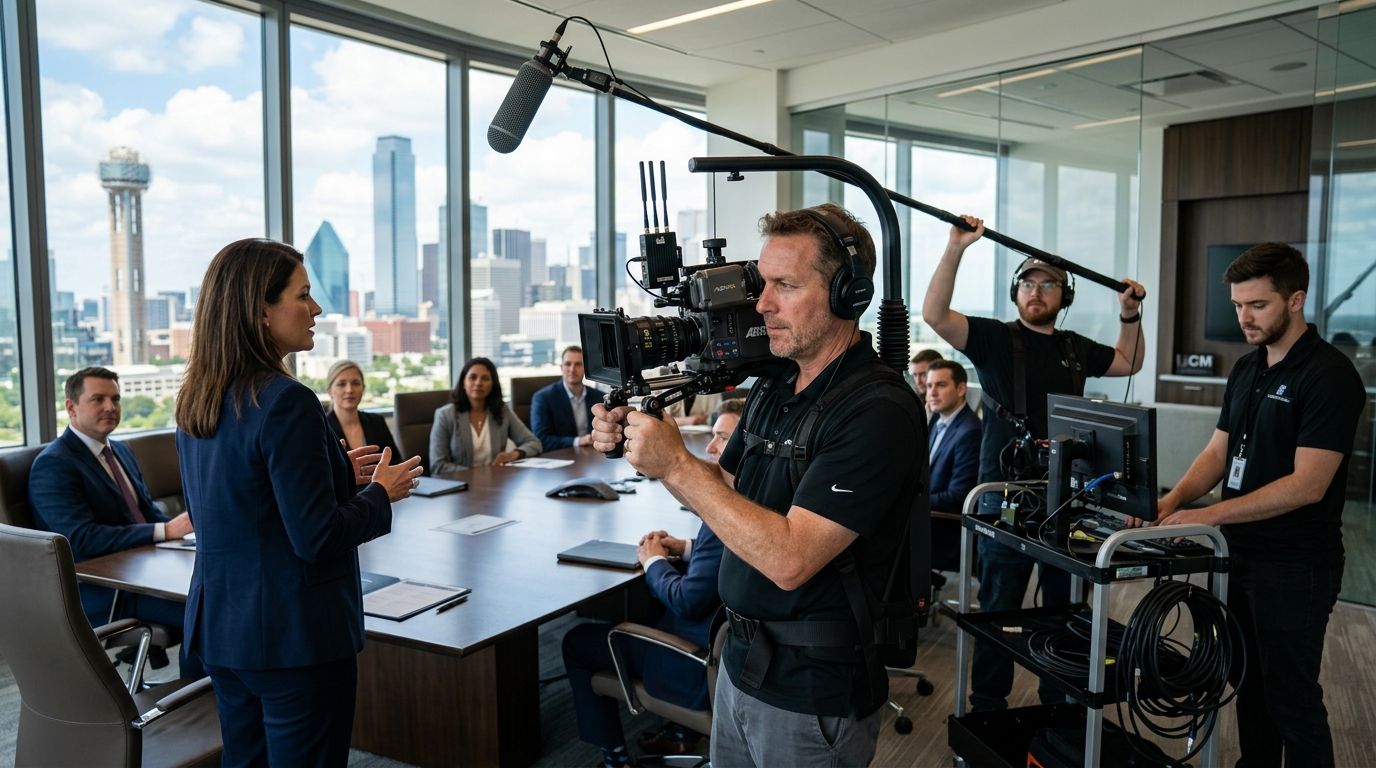
Brands shopping for text-to-video AI tools for brand marketing in 2026 are really choosing between three different things: raw generation engines, avatar platforms, and full production systems with a human checking the output before it goes live. Pick the wrong category and you either overpay for a self-serve tool that cannot finish a campaign, or you hire a full studio for a job a subscription tool could handle.
- Runway wins for raw creative control among text-to-video AI tools for brand marketing in 2026.
- Synthesia and HeyGen lead for multilingual avatar-led corporate video at scale.
- Production Soup adds the producer review gate that catches fog, water, and hand artifacts before launch.
- OpenAI Sora suits concept work and b-roll, not finished brand campaigns on its own.
- Pika handles fast social test clips, not brand-safe polished output.
Why this matters
A text-to-video model can generate a beautiful shot and still fail on the details a client's eye catches instantly: fog that does not scatter light correctly, water that skips frames, a hand with the wrong number of fingers. None of that is a brand marketing problem until the clip ships. Then it is a screenshot on a competitor's feed.
The tool matters less than what happens to the output after generation. Production Soup runs AI-visibility checks alongside production work because a video that looks fine to a generation model can still misrepresent a brand in ways AI search assistants and human viewers both notice. That is the filter this list applies to every entry below.
What makes the best text-to-video AI tool for brand marketing
- Physics and continuity fidelity — does fog, water, and motion hold up across a full scene, not just a hero frame
- Brand consistency across clips — can the same tool hold a look across 10 shots, not just one
- Human review before delivery — is there a producer accountable for the final cut, or does the raw export go straight to the feed
- Localization support — multilingual dubbing and avatar options for global campaigns
- Turnaround speed for iteration — how many rounds does it take to get a usable clip
- Fit with a broader visibility strategy — does the output work inside an SEO, AEO, and GEO plan, or is it a one-off asset
Text-to-video AI tools for brand marketing: at a glance
| Tool | Best for | Standout feature | Key limitation |
|---|---|---|---|
| Production Soup | Full-service brand video with human review | Producer review gates before delivery | Not a self-serve, instant-generate tool |
| Runway | Broad creative control | Camera control and inpainting on generated footage | Raw output still needs manual review |
| OpenAI Sora | Photorealistic concept video | Strong scene coherence on short clips | Clip length limits, no built-in review layer |
| Synthesia | Multilingual corporate video | Fast avatar-led localization | Reads corporate, not narrative brand storytelling |
| HeyGen | Localized sales and marketing video | Avatar and voice customization at scale | Same avatar ceiling as Synthesia |
| Luma AI Dream Machine | Stylized motion and b-roll | Strong camera-motion realism | Weak for dialogue-driven brand spots |
| Pika | Fast social-first test clips | Quick prompt-to-clip turnaround | Lower fidelity for brand-safe polish |
1. Production Soup: best text-to-video AI approach for full-service brand production
Production Soup does not compete as a raw generation model. It runs a six-step system — see the gap, plan the work, create the stories, make the content, put it live, watch the numbers — that pulls in text-to-video models where they fit, then routes every clip through local checks and producer review before it counts as finished brand footage. For teams weighing AI video production tools for enterprise brands, this is the category that answers who is accountable for the final cut.
Production Soup pros:
- A producer signs off before anything reaches a public feed
- Works across verticals, not locked to one industry template
- Ties video output to a broader SEO, AEO, and GEO visibility plan
Production Soup cons:
- Not self-serve — you cannot sign up and generate a clip the same afternoon
- Turnaround depends on scope, not a fixed subscription tier
- Overkill for a single quick social test clip
Best for: brands that need finished, on-brand video without managing an AI tool stack themselves. Verdict: Buy if you need someone accountable for what ships.
2. Runway: best text-to-video AI tool for creative teams with in-house review
Runway generates and edits video from text or image prompts, with camera control and inpainting built into its Gen-line models. It is the closest thing on this list to a general-purpose creative engine.
Runway pros:
- Broad creative control over camera movement and framing
- Strong for stylized and cinematic shots
- Frequent model updates keep output quality moving through 2026
Runway cons:
- Raw output still needs a human check for physics artifacts in fog and water
- No built-in producer oversight — that responsibility stays with you
Best for: creative teams that already have someone reviewing every export. Verdict: Buy if you have in-house review capacity.
3. OpenAI Sora: best for photorealistic concept video
Sora generates short clips from text prompts with an emphasis on photorealism and scene coherence, accessible through ChatGPT plans.
Sora pros:
- Strong photorealistic quality on short concept clips
- Fast way to test an idea before committing production budget
Sora cons:
- Clip length limits make full campaigns hard to build from Sora alone
- Consistency across multiple clips still needs manual assembly
Best for: testing a concept before greenlighting full production. Verdict: Buy for concept work, Hold for finished campaigns.
4. Synthesia: best for multilingual avatar-led corporate video
Synthesia turns scripts into presenter-led videos using AI avatars, with multilingual dubbing built in.
Synthesia pros:
- Fast localization across languages without a camera crew
- Good for training and onboarding content at volume
Synthesia cons:
- Avatar delivery reads corporate, not narrative
- Limited range for emotional or story-driven brand spots
Best for: internal training and multilingual corporate video. Verdict: Buy for that use case, Skip for brand storytelling.
5. HeyGen: best for localized sales and marketing video at scale
HeyGen takes a similar avatar and voice-cloning approach to Synthesia, aimed more at sales enablement and marketing localization.
HeyGen pros:
- Quick localization workflow across markets
- Avatar and voice customization options
HeyGen cons:
- Same brand-storytelling ceiling as Synthesia
- Output quality depends heavily on script discipline
Best for: sales teams needing localized video fast. Verdict: Buy for sales enablement, Hold for brand campaigns.
6. Luma AI Dream Machine: best for stylized motion and b-roll
Luma AI emphasizes camera motion and cinematic movement over dialogue or narrative structure.
Luma AI pros:
- Strong motion realism for b-roll style shots
- Useful for mood boards and pitch decks
Luma AI cons:
- Weak fit for dialogue-driven or narrative brand spots
Best for: mood-board and b-roll content. Verdict: Hold unless you need motion-heavy filler footage.
7. Pika: best for fast social-first test clips
Pika is built for quick, stylized text-to-video generation aimed at short social clips.
Pika pros:
- Fast turnaround from prompt to clip
Pika cons:
- Lower fidelity — not brand-safe as final output
Best for: rapid social testing before a bigger production commitment. Verdict: Hold for anything beyond a quick test.
How we ranked these
Every entry was weighed against the six criteria above: continuity fidelity, brand consistency across clips, human review before delivery, localization, iteration speed, and fit with a broader visibility strategy. Tools with no review layer score lower on brand safety even when raw output quality is strong. Understanding what AI video production costs in 2026 matters here too — a cheaper subscription that needs three extra review rounds is not actually cheaper.
“If a generated clip needs three review rounds to fix physics on fog or water, it is not ready for brand work.”
Which text-to-video AI tool should you choose?
For raw creative control with your own review process in place, Runway is the default pick in 2026. For multilingual corporate or training content, Synthesia or HeyGen cover that ground. For a brand that wants finished, accountable video without managing the AI stack directly, Production Soup's review-gated system is the fit. Testing a concept before committing budget: Sora. Fast social tests: Pika.
Get a gap check on your video plan
See where AI tools fit and where a producer needs to review the output.
FAQ
What is the best text-to-video AI tool for brand marketing in 2026?
Runway leads for raw generation control, while Production Soup leads for a finished, reviewed system built on top of tools like Runway and Sora. The right pick depends on whether you have in-house review capacity.
Is OpenAI Sora better than Runway for brand video?
They solve different problems. Sora is stronger for quick photorealistic concept clips, while Runway gives more camera control for building out a full shot sequence.
Can AI-generated video go straight to a brand feed without review?
Not safely in 2026. Physics artifacts in fog, water, and hands remain common across current models, and a human review step catches most of what makes generated footage look fake.
How much does AI video production cost in 2026?
Cost depends on scope, review rounds, and how much traditional production is layered in. Check a dedicated cost breakdown before budgeting a campaign.
Which AI tool is best for multilingual corporate video?
Synthesia and HeyGen both specialize in avatar-led multilingual video. Both are built for training and sales content rather than narrative brand storytelling.
Do text-to-video AI tools replace video production companies?
They replace some raw shooting, not the judgment call on what is usable. Most finished brand campaigns in 2026 still route generated footage through producer review before publishing.
What is GEO and why does it matter for brand video?
Generative engine optimization covers how AI assistants surface and cite brand content. Video built inside a GEO plan is made with that visibility in mind, not as a standalone asset.
Which AI video tool has the fewest physics artifacts on fog and water?
No current model handles fog and water perfectly across a full scene. Test any tool against those specific elements with a producer review before treating output as brand-ready.
One last thing
Run every AI-generated clip through a specific physics check before it touches a public feed: fog scatter, water continuity, hand and finger count, reflections. That single step, done by a person and not a model, catches most of what separates usable 2026 brand video from a clip that gets screenshotted for the wrong reasons.