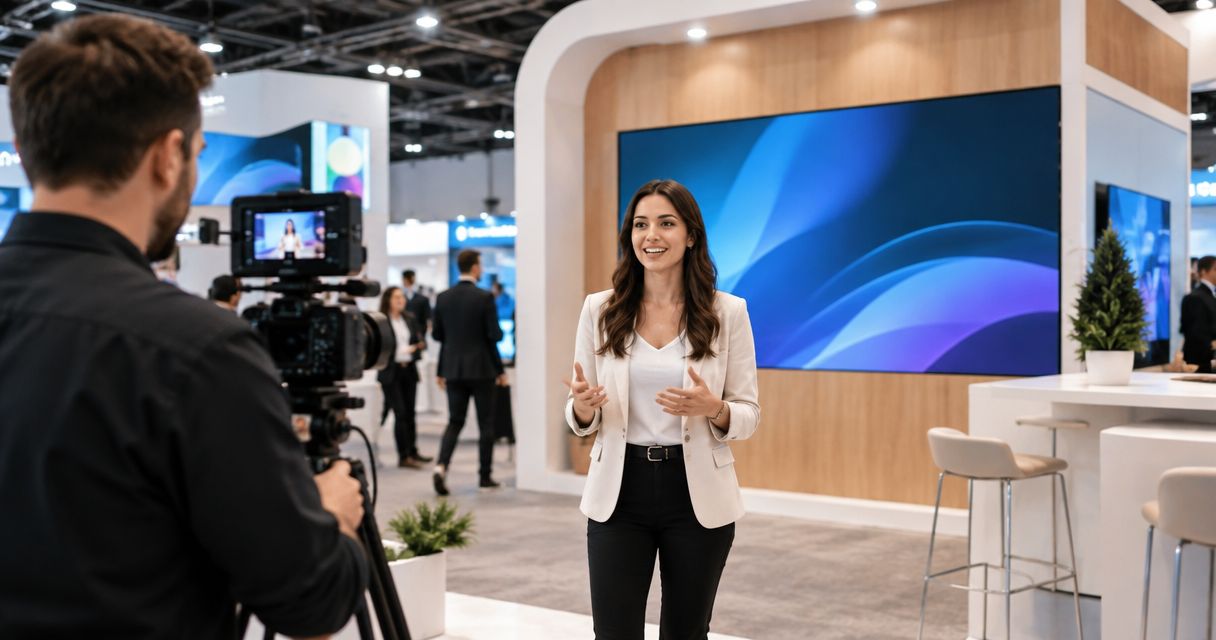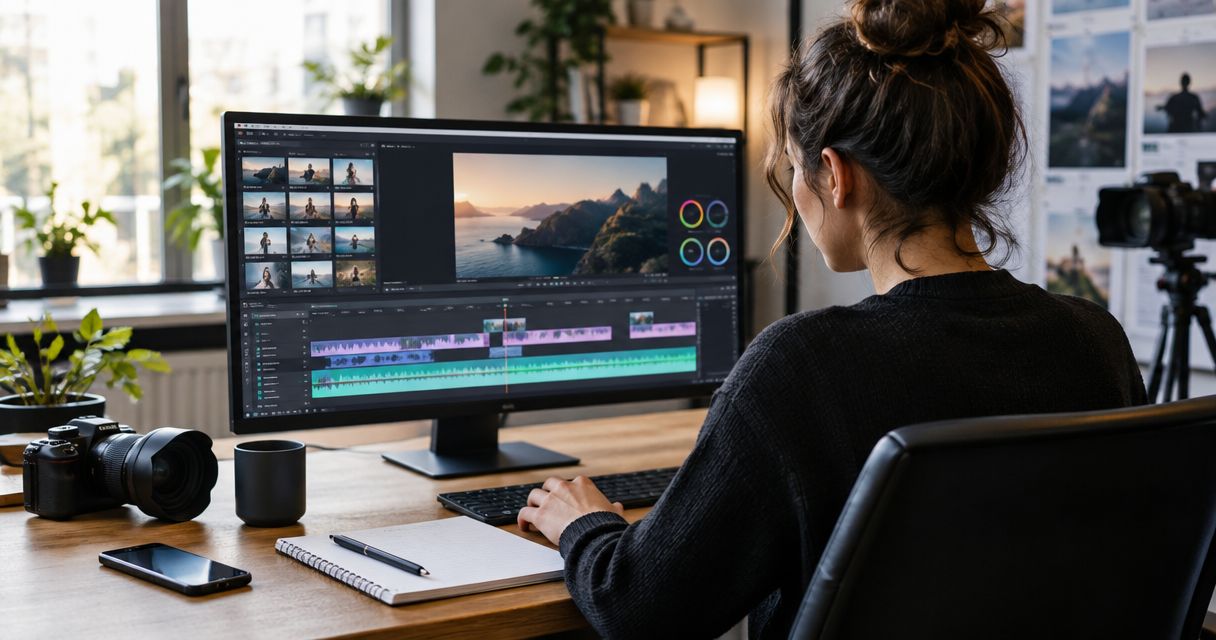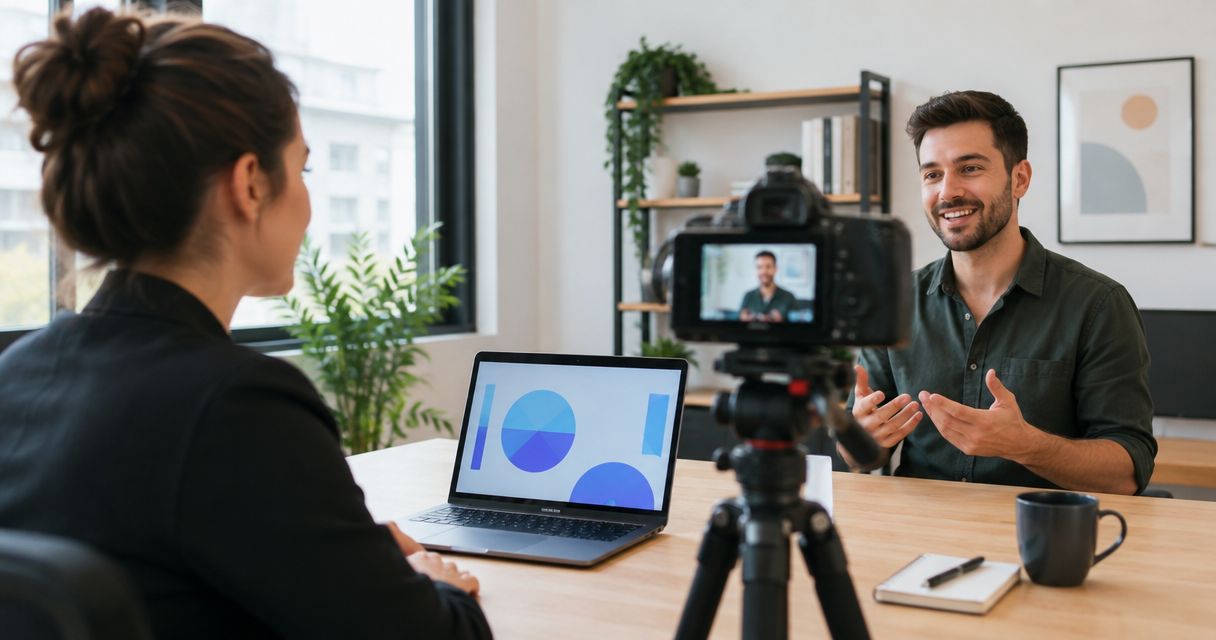
Case study video cost depends on the agreed scope: customer research, filming, editing, approvals, and final deliverables. Get an itemized production quote for your 2026 project rather than treating a generic average as your budget. Confirm whether travel, licensing, extra edits, and distribution assets sit inside that quote or outside it.
- Case study video cost starts with scope, not runtime. Compare quotes against the same customer story and deliverables.
- Production Soup combines film production and search visibility services; define which work your customer video actually needs.
- A customer testimonial needs real customer evidence. Generated footage cannot establish that an outcome happened.
- Approve the customer, claims, filming access, and review process before committing to production.
How much does it cost to produce a case study video?
Your usable budget is the quote for an agreed production scope, not a headline average. Ask each provider to price the same brief, identify exclusions, and explain what triggers additional work. A finished video's duration alone does not tell you how much work sits behind it.
For a 2026 project, separate the customer story from the production treatment. Start with the business problem, the customer's experience, and the evidence you can publish. Then decide how to capture it. Production Soup's production services cover film and other creative work; specify the case study deliverables when requesting a scope.
Use this breakdown to check what a proposal includes. These are scope questions, not assumed inclusions in any provider's offer.
| Work area | What you should ask to include | What to clarify separately |
|---|---|---|
| Story development | Customer research, interview preparation, story outline | Who verifies results and obtains customer approval |
| Production planning | Schedule, crew responsibilities, access requirements | Travel, location permissions, rescheduling terms |
| Filming | Interviews, supporting footage, sound recording | Additional locations, specialist equipment, pickups |
| Post-production | Editing, sound treatment, color work, graphics | Animation complexity and changes after approval |
| Delivery | Agreed exports, captions, file handover | Alternate formats, translations, source files |
| Publication | Defined publishing responsibilities | Web copy, hosting, paid media, measurement |
A proposal that says only “case study video” leaves too much open. Ask what happens between the first customer conversation and the final approved files.
Why this matters
A customer case study has two jobs: present a credible result and make that result useful to a buyer. Attractive footage cannot compensate for an unsupported claim. An excellent interview also loses value if the finished piece never reaches the sales conversation it was meant to support.
Your budget decision therefore starts before the camera booking. Identify the buying question the video must answer, then fund the work needed to answer it clearly. That keeps production choices tied to evidence rather than decoration.
Which case study format should you quote?
Choose the simplest treatment that can show the customer's experience honestly. The options below are planning choices, not named packages or pricing tiers. Best for means fit for the story—not an automatic recommendation to spend more.
| Format | Best for | Main advantage | Main limitation |
|---|---|---|---|
| Remote customer interview | A customer who can participate remotely but cannot host a crew | Avoids an on-site shoot when the interview can carry the story | Recording quality depends on the customer's environment and setup |
| On-location customer story | A result you can demonstrate in a real workplace | Connects the interview with visible people, processes, or products | Requires location access and coordination around customer operations |
| Interview with existing footage | A story supported by usable, cleared recordings | Builds around material you already hold | Gaps in coverage or usage rights can limit the edit |
Remote customer interview
Best for: a story whose strongest evidence is the customer's explanation. Ask the producer how they will prepare the speaker, check the recording environment, and handle supporting material. Avoid assuming that a remote call automatically produces publishable sound and pictures.
The trade-off is control. You cannot select a remote treatment and expect the same control over the room, lighting, and background that a planned location shoot provides.
On-location customer story
Best for: a result that becomes clearer when viewers see the work. Show the process being discussed, not unrelated office footage. Confirm which activities can be filmed without exposing confidential information or disrupting operations.
The trade-off is coordination. Customer availability, location permission, and access to relevant activity must align before filming starts.
Interview with existing footage
Best for: a customer story with relevant footage already available. Review the actual files before approving this approach. A folder of clips is not proof that you have the coverage, quality, or permissions the edit needs.
The trade-off is flexibility. Existing material can shape the story, but it should not force unsupported connections between a customer's statement and an unrelated visual.
Why case study video cost varies
For your 2026 brief, define the factors below before asking for comparable quotes. Each changes the work you are commissioning; none establishes a universal rate.
- Customer readiness. A willing speaker still needs a clear story, permission to participate, and agreement on what can be disclosed. Assign responsibility for securing those decisions.
- Filming access. State whether the customer can host a crew, which locations matter, and whether the relevant work can be recorded. Do not leave access assumptions inside a vague production line.
- Evidence requirements. Identify the documents, demonstrations, or approved results supporting the story. Ask who checks each claim before it enters the edit.
- Production treatment. Specify interviews, original supporting footage, existing material, and any animation. Each element needs a defined purpose.
- Review responsibilities. Name the people who approve the story and the finished piece. Explain whether customer, legal, or communications review is required.
- Delivery requirements. List the final formats, captions, transcripts, and publishing assets. Distinguish a shorter edit from a new narrative built for another audience.
Reduce uncertainty before reducing production quality. Removing a necessary interview is not the same decision as resolving an unclear approval process. Challenge both, but understand what each change removes from the finished story.
Build a brief that produces a comparable quote
Use a 1-page brief as your starting document. That is a recommended planning limit, not a production requirement: the point is to make the essential decisions readable before adding supporting files.
Name the buyer
Write down who should watch the video and what they need to believe afterward. “Our audience” is too broad. A purchasing lead assessing delivery risk needs different evidence from a technical buyer checking how a product fits an existing workflow.
State the customer outcome
Describe the change the customer can substantiate. Include a baseline and timeframe only when the customer can verify them. If the evidence is qualitative, use an accurate account of the experience rather than adding an unsupported percentage.
Inventory the evidence
List the interviewee, available records, filming opportunities, and existing footage. Mark which items are approved for public use. Keep internal evidence separate from material cleared for publication.
Define the deliverables
For a simple planning example, request 1 main film and 2 short edits. Those counts are a suggested brief, not an agency package. Specify whether the short edits reuse the main narrative or answer different buying questions.
Assign approval
Choose a lead approver on your side and confirm the customer's approval contact. Ask the provider to describe how feedback is collected and what happens when an approved direction changes. Do not assume unlimited revisions.
Confirm publication
Name where the finished story will appear and who will publish it. In your 2026 scope, distinguish production delivery from website implementation, sales enablement, and search visibility work. A file handover does not describe those additional tasks.
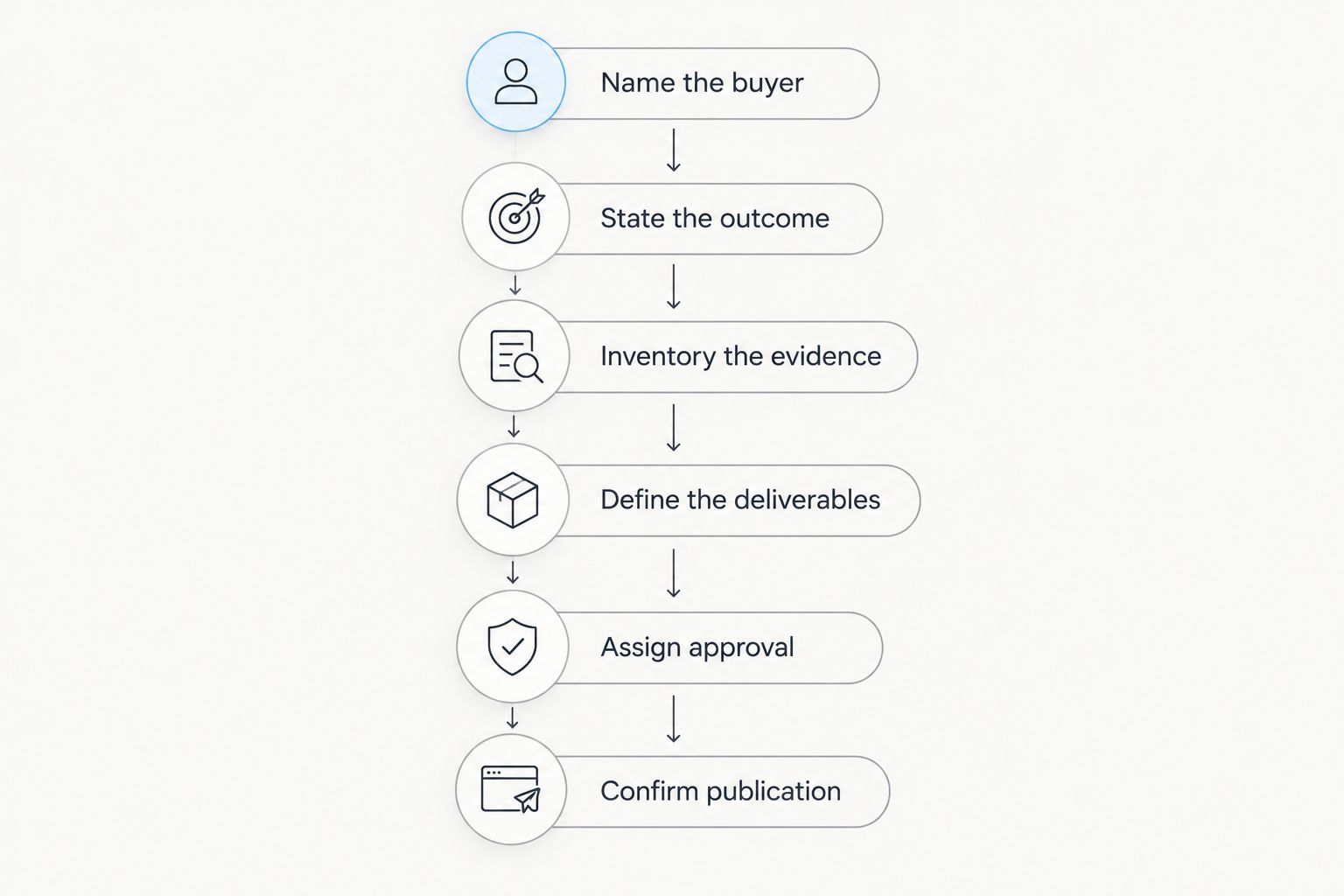
Before you start a production brief, collect the customer's participation status and the evidence behind the story. Those details make the conversation about a real project rather than an abstract video request.
What should you cut when the scope is too large?
Protect the customer evidence; simplify the treatment around it. Start by questioning elements that do not help a buyer understand the result. A decorative sequence needs a stronger justification than an interview answer explaining how the customer solved a problem.
Keep the main narrative focused. Additional speakers, locations, and versions should each have a clear job. If two deliverables answer the same question for the same audience, ask whether both are necessary before commissioning them.
Preserve intelligible speech, accurate claims, and a review process that lets the customer stand behind the finished piece. Removing those safeguards changes the credibility of the case study, not just its appearance.
Ask for exclusions in writing. A leaner scope works when everyone knows what has been removed; it fails when missing work reappears as an expectation during editing.
Does AI reduce case study video cost?
AI-assisted work needs its own scope and review criteria. Ask which tasks use generated material or automated processing, what a person checks, and how the treatment preserves the customer's actual account. Do not accept a general efficiency claim as an itemized production plan.
Generated footage cannot prove that a customer used a product or achieved a result. Treat illustrative scenes as illustrations, not documentary evidence. Never turn a scripted endorsement into an apparent customer statement.
For a 2026 customer story, decide where authenticity is non-negotiable before selecting production tools. An actual interview and approved evidence remain distinct from visual material created to explain an idea.
Is an agency necessary for a customer case study?
An agency is appropriate when you want outside responsibility for story development, production, and delivery. An internal team is appropriate when it has the capacity and skills to own those tasks. Neither choice removes the need for customer permission and claim verification.
Production Soup is best for teams seeking film production and search visibility services from the same creative agency. That breadth fits a project that needs both, but it is not a reason to commission both. Keep the scope limited to the work your case study requires.
How do you compare quotes fairly?
Compare responsibilities before totals. A filming-only proposal and a story-to-publication proposal describe different jobs, even if both use the label “case study video.” Ask each provider to identify included work, client responsibilities, exclusions, and change conditions.
Check the handover details as well. Confirm the agreed final files and ask whether transcripts, captions, source files, and reuse permissions are included. Do not assume ownership or licensing terms from a provider's portfolio.
Finally, ask who resolves a conflict between a stronger edit and a customer's factual correction. Accuracy wins. A production process should preserve the customer's meaning, not make a claim more dramatic than the evidence allows.
FAQ
What's included in case study video cost?
Case study video cost covers the work listed in your agreed scope, not a standard set of inclusions. Check story development, filming, editing, approvals, final files, and any publication work separately.
Can I get a case study video quote before the customer agrees?
You can request a provisional scope before the customer agrees, but identify participation and access as unresolved assumptions. Confirm both before committing to a production plan.
Is a remote customer interview the right choice?
A remote customer interview fits a story that the customer's explanation and available evidence can support. Check the recording environment and supporting material before choosing it instead of a location shoot.
Does a shorter case study video require less work?
A shorter case study video does not automatically require less work. Research, filming, evidence checks, and approvals can remain necessary regardless of the final runtime.
Can AI create the customer testimonial for me?
AI-generated content cannot establish a real customer's experience. Use an actual customer's approved account and keep generated illustrations distinct from evidence of what happened.
Should I request short edits with the main case study?
Request short edits when each has a defined audience, message, and publishing destination. Agree on those uses before editing so the provider can scope the additional deliverables.
Can Production Soup help with production and search visibility?
Production Soup offers film production and search visibility services. Specify whether your case study needs production alone or additional publishing and visibility work; do not assume they are bundled.
One last thing
Before booking the shoot, ask the customer what they cannot approve. Confidential results, unnamed partners, and restricted locations belong in the brief—not in a dispute over the final cut. An early boundary is more useful than a late surprise.