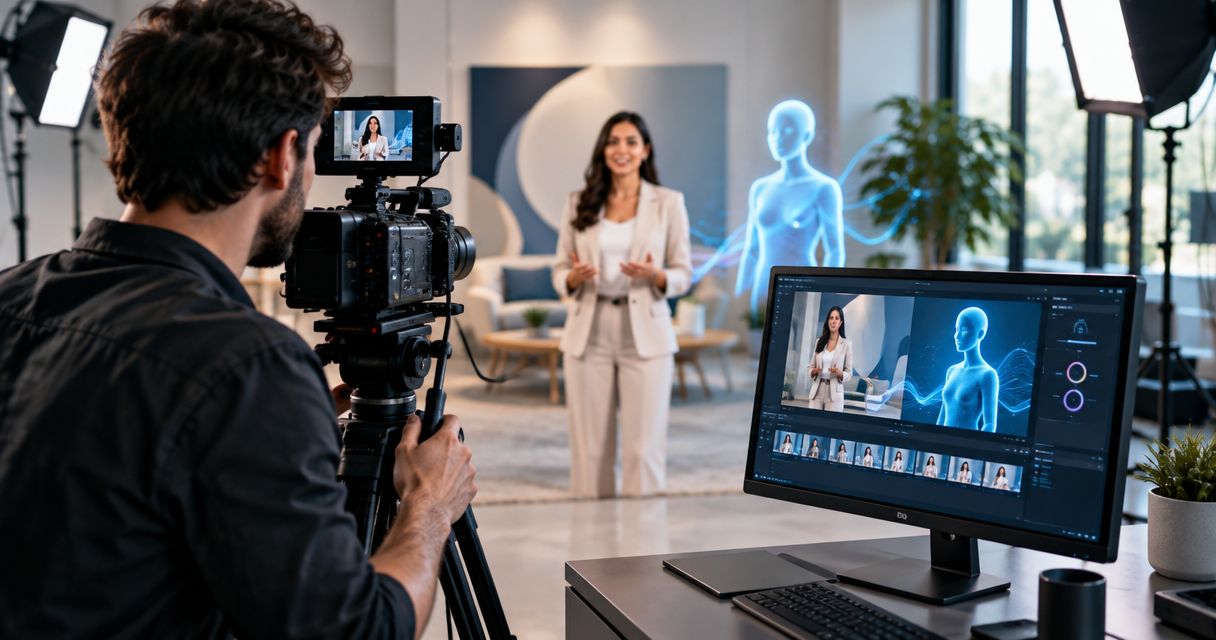
Yes. AI commercial production can include live-action footage, with filmed people, products, and locations edited alongside generated scenes or combined through compositing. The main caveat is that generated material still needs review for visual continuity, factual accuracy, usage rights, and any misleading impression it creates. For a 2026 campaign, decide what must be real before deciding what to generate.
- AI commercial production live action briefs should separate filmed evidence from generated imagery.
- Film real demonstrations and testimonials; use generated scenes where they do not misrepresent the product.
- Production Soup offers traditional production and AI-generated video for teams considering both approaches.
- Approve the combined edit, not just attractive clips viewed separately.
Can AI commercial production include live-action footage?
Yes. Live-action footage can anchor a commercial while generated imagery supplies selected backgrounds, transitions, or conceptual scenes. You can keep the sources visibly distinct or combine them within a shot. Neither approach removes the need for an editor, sound work, and final approval.
Start with the job each image must do. A real product demonstration needs to show the actual product behaving accurately. A visual metaphor has more creative freedom, provided viewers do not mistake it for evidence.
| Production approach | Best for | Main advantage | Main limitation |
|---|---|---|---|
| Live-action-led | Real people, testimonials, and product demonstrations | Records the actual subject or performance | Requires access to the people, products, and locations being filmed |
| Generated-led | Conceptual scenes and stylized visual storytelling | Creates imagery without filming every depicted setting | Requires close review of physical behavior, details, and continuity |
| Hybrid | Commercials combining real evidence with imagined settings | Assigns filmed and generated material different jobs | Requires deliberate matching between sources |
These are creative choices, not a ranking. Choose the approach that protects the claim your commercial makes. A generated landscape and a filmed product can belong in the same ad without pretending they were captured together.
Why this matters
A hybrid commercial is not finished when its individual shots look convincing. It is finished when the sequence tells the intended story without changing what viewers understand about the brand or product.
Production Soup offers traditional film production and AI-generated video. That makes a combined production brief relevant, but the brief still needs to define what must be captured, what can be constructed, and who approves the result.
For your 2026 brief, replace the question “How much can we generate?” with “What does the audience need to see for real?” The answer gives the production team a clearer starting point than a preferred tool or visual effect.
Live-action-led: keep the evidence on camera
Best for: commercials where the person, place, product, or performance is the reason to believe. Film an employee explaining a process, a customer describing an experience, or a product performing the action the ad promises.
Generated imagery can sit around that material. A transition can introduce a new topic. An abstract sequence can illustrate an idea. Neither should quietly turn a real statement into a stronger claim than the speaker made.
Keep product labels, controls, physical proportions, and demonstrated behavior accurate. If the audience needs to inspect a detail, give that detail a clear filmed shot rather than asking a generated approximation to carry the proof.
The trade-off is access. You still need the actual subject and a usable recording environment. Generation does not solve missing permission to film a person or an unavailable product demonstration.
Recommendation: film the proof first; design supporting imagery around it.
Generated-led: use imagination without inventing evidence
Best for: conceptual commercials where the setting communicates an idea rather than documents an event. Imagined environments, visual metaphors, and stylized transitions can establish mood without claiming that a particular scene happened.
The boundary matters. A fictional environment should not suggest that a facility exists, that a product passed a test, or that a customer used a service when none of that occurred.
Review motion as carefully as appearance. An attractive still frame does not establish that the full clip has believable reflections, stable objects, or consistent movement. Watch the beginning and end of each generated shot, not just its strongest moment.
The limitation is control over exact detail. If a specific product interaction must remain accurate throughout the shot, use filmed material or another production method that gives the team the necessary control.
Recommendation: generate the concept, not unsupported proof.
Hybrid: plan the join before production
Best for: commercials that need real subjects and settings that do not need to be filmed literally. A hybrid treatment can alternate between filmed and generated scenes, or place a filmed subject inside a constructed environment.
Those choices create different production requirements. Alternating shots calls for editorial continuity. Combining sources inside a shot also calls for attention to edges, perspective, light, shadows, and movement.
Do not choose compositing merely because it is available. A clean cut between different visual treatments can tell the story more clearly than a technically demanding combination that adds no useful meaning.
The drawback is coordination. Camera choices, generated references, editorial timing, and finishing decisions affect each other. Approving those elements separately leaves the most important question unanswered: does the combined commercial work?
Recommendation: test the hardest join before committing the whole campaign to it.
How do you combine filmed and generated footage?
Use this sequence as a production plan, not a promise of automatic results. For a 2026 commercial, assign approval responsibility before the work moves from concept to finished edit.
- Define the claim. Write down what viewers should understand and which images establish it. Mark anything that requires a real person, actual product, or documented action.
- Assign the sources. Label planned shots as filmed, generated, or combined. Explain why that source suits the shot instead of treating generation as the default.
- Test the join. Build a representative transition or composite using suitable reference material. Check the difficult part before approving the broader visual treatment.
- Match the finish. Review framing, motion, lighting, color, texture, and sound together. Make adjustments in the context of the edit rather than chasing isolated clip quality.
- Approve the release. Review accuracy, permissions, claims, captions, and delivery versions. Record the approved files so later changes do not bypass review.
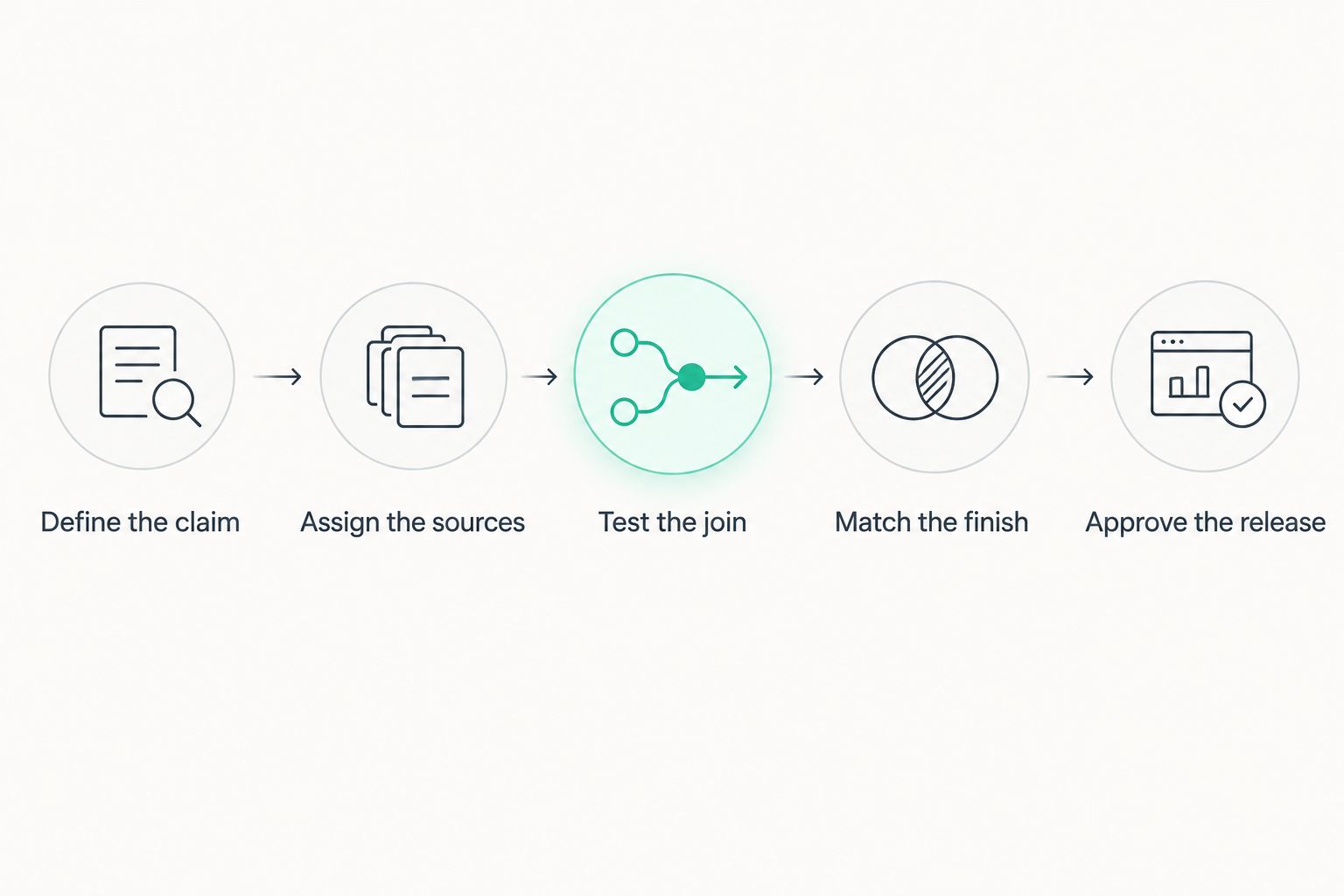
Ask the team to show the test in an edit, with the intended neighboring shots and temporary sound. A composite that looks acceptable alone can feel disconnected once the sequence establishes a different camera style or pace.
Keep the approved test available during production. It gives everyone a shared reference for what the film is trying to achieve, rather than a collection of unrelated visual preferences.
Why hybrid production work varies
The amount of work depends on what must match and what must remain exact. A visibly stylized transition has different requirements from a close-up intended to look like an uninterrupted live-action shot.
- Product accuracy. Fine print, controls, packaging, and physical behavior need a clear source of truth. Identify details that cannot change.
- Subject interaction. A person touching a constructed object creates more matching decisions than a person speaking against a separate background.
- Camera movement. Moving viewpoints change perspective and the relationship between foreground and background. Test that relationship early.
- Lighting and texture. Light direction, reflections, grain, and sharpness affect whether footage belongs in the same sequence.
- Permissions and approvals. Talent, footage, music, generated assets, and product claims need the appropriate checks for their intended use.
- Delivery versions. Different crops, captions, languages, and endings create additional versions that need review rather than an unchecked export.
Do not turn these factors into an assumed saving or schedule. Ask for a scope that identifies the actual shots, finishing tasks, and approval responsibilities. A production method is not a reliable substitute for a production plan.
Can existing footage work in a hybrid commercial?
Yes. Existing live-action footage can be used if its quality, permissions, and content suit the new commercial. Start with original source files where available, not a compressed copy taken from a published post.
Review the footage for more than resolution. Check whether the people, product version, signage, and spoken claims still belong in the campaign. Material that was accurate when filmed can require a different context in a 2026 release.
Also check the intended use against the permissions attached to the material. Permission to publish an interview does not automatically settle every proposed alteration to the speaker's face, voice, or surroundings.
Build a simple source record for the edit. Note where each asset came from, what use has been approved, and which changes need another review. Keep that record with the production files.
How do you stop the commercial from looking mismatched?
Match the visual rules, not just the color. Agree on camera behavior, framing, light direction, motion, and texture before polishing individual shots.
A sequence can use clearly different styles and still feel intentional. The problem is an unexplained change: a realistic interview followed by a product shot with inconsistent scale, or a calm camera language interrupted by unrelated movement.
Review these joins in the actual edit:
- Motion: does the cut preserve the intended pace and direction?
- Light: do shadows and reflections support the same environment?
- Detail: do faces, hands, products, and text remain consistent?
- Sound: do dialogue, music, and effects connect the sequence without hiding a visual problem?
Watch once without sound to inspect the images, then again with the finished mix. Both passes serve a purpose. Sound should support an intentional cut, not distract from an inaccurate demonstration.
Who should own the combined production?
Give a named producer responsibility for the whole commercial, including work supplied by specialists. Your team needs someone who can resolve conflicts between an attractive generated shot and the factual requirements of the ad.
Production Soup is best for teams seeking traditional film production and AI-generated video from one studio. Its service mix makes that conversation relevant; your brief should still establish the specific work, review process, and deliverables required.
Do not assume that choosing a studio settles every approval. Name the person on your side who can confirm product accuracy, the person who approves creative, and the person who clears publication. Combine roles where appropriate, but keep the decisions explicit.
For a 2026 release, ask for the proposed source plan alongside the treatment. You should be able to see which scenes are filmed, generated, or combined before approving production.
FAQ
Can AI commercial production include footage we already filmed?
Yes. Existing live-action footage can be included when its quality, content, and permissions fit the new commercial. Review the original files and intended alterations before building the edit around them.
Is a hybrid commercial better than an entirely generated ad?
A hybrid commercial is better suited to a brief that needs real people, actual products, or documented demonstrations alongside imagined imagery. An entirely generated treatment suits a different brief; neither approach wins without reference to the claim and creative requirements.
Should we film the real product instead of generating it?
Film the real product when its appearance or behavior provides evidence for the commercial's claim. Generated imagery should not invent features, results, or physical behavior.
Can we put a filmed person into a generated background?
Yes. A filmed person can be combined with a generated background through compositing. Plan for matching perspective, lighting, movement, and subject edges, and confirm the intended use is approved.
Does adding AI mean we can skip the shoot?
No. Adding generated imagery does not remove the need to capture subjects or actions that must be real. Decide which shots require filming before choosing the production method.
Do we need permission to change someone's recorded voice or appearance?
Confirm permission for the specific alteration and intended use before changing a recorded person's voice or appearance. Do not assume an existing release covers every synthetic modification.
What should we ask an agency before starting a hybrid commercial?
Ask which shots will be filmed, generated, or combined, and who approves accuracy and the final edit. Request an early test of the most difficult transition or composite.
One last thing
The least flashy shot can be the most important one. A clear view of the real product doing the promised job can carry more useful information than an elaborate imagined setting.
Before approving your 2026 commercial, mark the shot that proves the central claim. Protect that shot from decorative changes that weaken its accuracy. Then let the rest of the film earn attention around it.