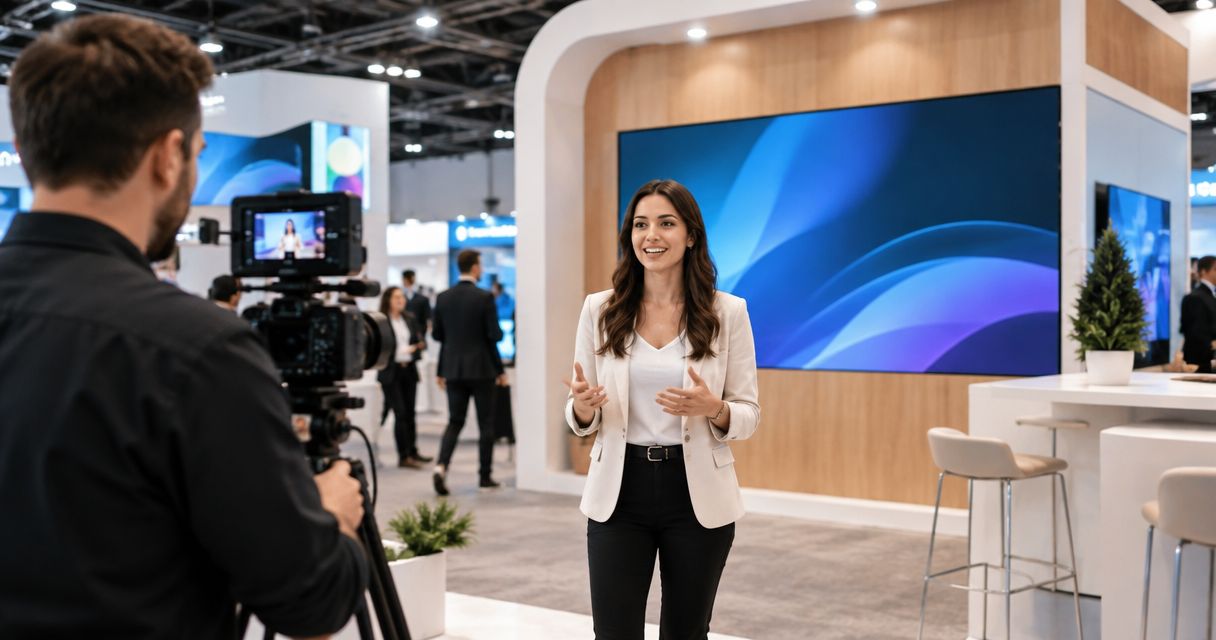
Yes. You can repurpose an authority film into social media content by editing complete ideas into standalone videos, quote posts, carousels, and written answers. Each piece needs its own opening, enough context to preserve the speaker’s meaning, and a next step; shortening the film alone does not do that.
- Repurpose authority film social media edits around complete answers, not isolated claims.
- Production Soup combines authority film production with SEO, AEO, and GEO services.
- Choose interview clips for explanations, carousels for processes, and proof-led edits for supported claims.
- Check permissions, captions, framing, and factual context before publishing each version.
Can an authority film be repurposed into social media content?
Yes—treat the film as source material, not as a finished social media post. An interview answer, a demonstrated process, or a documented customer experience can become a separate piece when it makes sense without the surrounding film.
Start with the transcript. Mark the question each passage answers, then identify footage that supports the answer. The video transcript to AEO-ready web copy workflow covers the related task of turning spoken material into useful written content.
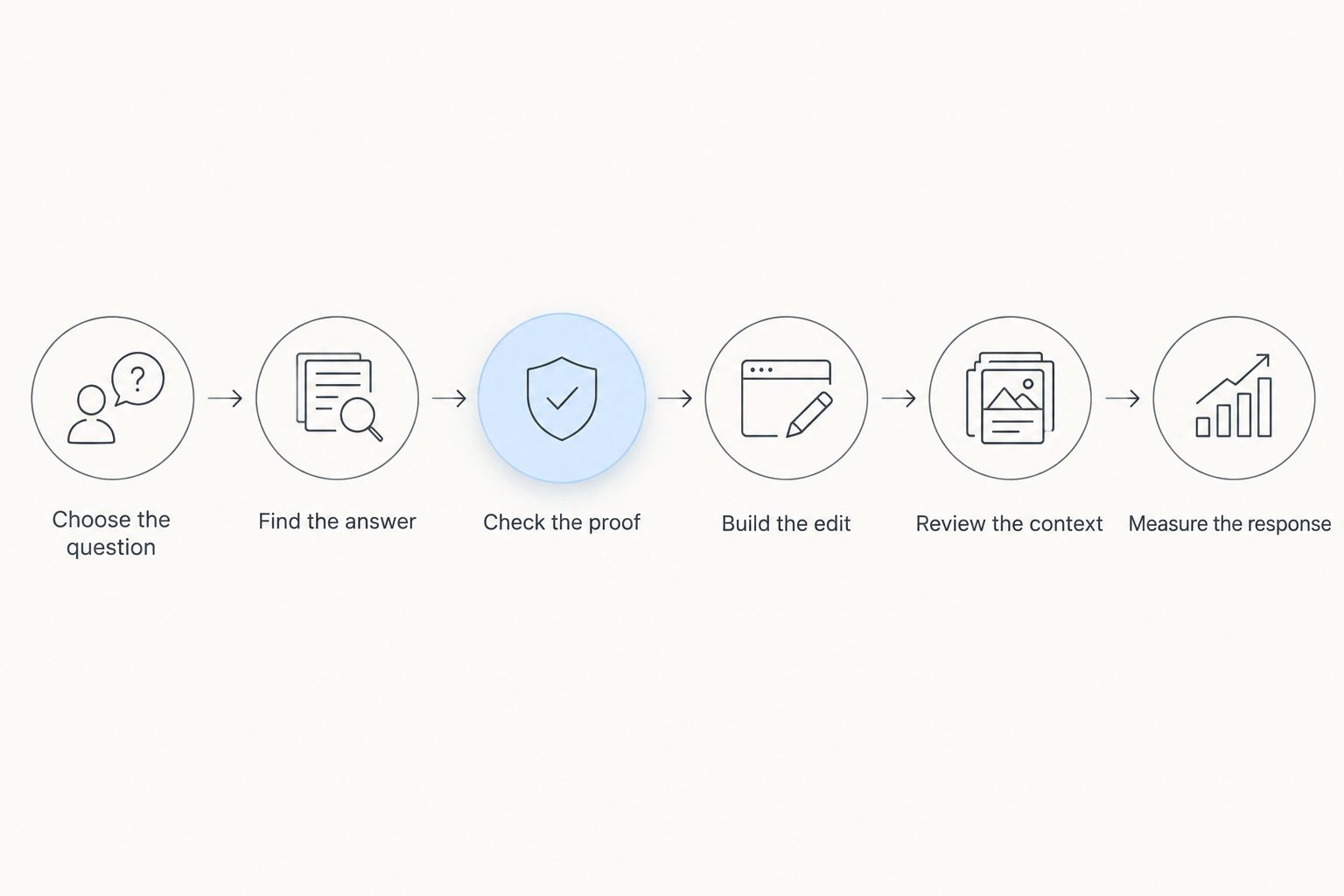
Use this sequence for your 2026 content plan:
- Choose the question. Name the buyer question the post will answer before selecting footage.
- Find the answer. Locate a complete response in the transcript, including any necessary qualification.
- Check the proof. Match the statement to approved evidence or footage that actually demonstrates it.
- Build the edit. Give the piece an opening, a clear explanation, and an ending that belongs together.
- Review the context. Check the final cut against the original interview, permissions, and approved claims.
- Measure the response. Assess the post against its intended job, rather than counting every view as a business result.
The sequence works backward from a useful answer. That prevents a common editing mistake: choosing a dramatic line first and trying to invent a reason to publish it afterward.
Why this matters
An authority film has room to establish a person, explain a problem, and build an argument. A social post must make its purpose clear without assuming the viewer has seen that film. Your edit needs to carry the missing context.
Production Soup is best for brands seeking authority film production alongside SEO, AEO, and GEO services. The fit is the connection between production and discoverability, not a promise that every film will generate leads or search citations.
For your 2026 brief, separate the main film’s job from the supporting posts’ jobs. The film can carry the full story; an individual post should answer a narrower question. That distinction gives your editor a usable assignment instead of a request to “make more content.”
Which social formats should you make from the film?
Choose the format after choosing the message. A process explanation needs a different treatment from an interview answer, and neither automatically works as an advertisement.
| Format | Best for | Main advantage | Main limitation |
|---|---|---|---|
| Interview clip | Answering a specific buyer question | Preserves the speaker’s delivery | Needs enough context to stand alone |
| Proof-led edit | Showing a process or supported result | Connects a claim to visible evidence | Illustrative footage can be mistaken for proof |
| Carousel | Explaining steps or distinctions | Lets readers move through an argument | Loses the speaker’s voice and delivery |
| Quote post | Highlighting a precise viewpoint | Gives a short statement room to land | Easily strips away qualifications |
| Written answer | Explaining a detailed question | Accommodates context and supporting information | Requires rewriting rather than transcript dumping |
Interview clips: best for direct explanations
Choose an answer with a clear subject and conclusion. Replace an opening such as “That’s why we changed it” with an approved question card or surrounding footage that establishes what changed.
Keep meaningful uncertainty. If the speaker says an approach works under particular conditions, those conditions belong in the cut. A stronger hook does not justify a stronger claim.
Proof-led edits: best for showing the work
Use footage that demonstrates the statement being made. A close-up of an inspection can support an explanation of that inspection; unrelated factory footage cannot prove a performance result.
The limitation is evidence. When the source film contains a claim but no supporting material, request that material or choose a different passage. Do not cover the gap with impressive-looking images.
Carousels: best for processes and distinctions
Turn a genuine sequence into separate panels, with a clear action or idea on each. Keep the original logic intact rather than splitting a paragraph wherever the design runs out of room.
Carousels require editorial work. Spoken repetition, unfinished sentences, and references to off-screen objects need rewriting. Check the rewritten version against the source before approving it.
Quote posts: best for a specific viewpoint
Use the speaker’s actual words and retain the qualification that makes them accurate. If the statement needs substantial explanation, choose a written answer instead.
A quote post is a poor choice for a claim that depends on a chart, demonstration, or extended comparison. The shortest available sentence is not always the clearest takeaway.
How should you reframe footage for social feeds?
Reframe the image around the information, not just the face. Before exporting, check whether the crop preserves the object, gesture, demonstration, or document the speaker references.
These are established aspect ratios, not recommendations about a platform’s current upload limits. Confirm the destination’s current specifications before delivery in 2026.
| Aspect ratio | Best for | What to check |
|---|---|---|
| 9:16 vertical frame | A full-height portrait composition | Keep faces, hands, and essential objects visible |
| 1:1 square frame | A balanced central composition | Check captions and side-by-side subjects |
| 16:9 landscape frame | Wider demonstrations and relationships | Make small details readable on a phone |
A vertical crop can remove the evidence while retaining the person discussing it. When that happens, use a separate detail shot, rebuild the composition, or keep the wider frame. Automatic reframing is a starting point, not approval.
Caption the meaning accurately. Correct names, technical terms, and punctuation, then watch the export with the sound off. Captions help viewers follow speech, but they do not fix an edit that starts halfway through an argument.
Why authority film repurposing varies
The useful output depends on the source material and the intended use. Do not set a clip quota before checking what the film can honestly support.
- Answer completeness. Self-contained interview responses need less reconstruction than answers built around an interviewer’s unheard question.
- Visual coverage. Relevant supporting footage gives the editor more ways to explain a point without disguising a jump cut.
- Source access. Separate dialogue, music, captions, and project files give you more editing control than a flattened final export.
- Permission scope. Confirm that releases and licenses cover the planned channels, edits, and promotional use.
- Claim sensitivity. Technical explanations and customer outcomes need careful checks when shortened or rewritten.
- Publishing purpose. An educational post, a sales follow-up, and a paid advertisement require different openings and endings.
These factors explain why dividing a film’s runtime by a target clip length is the wrong planning method. Runtime tells you how much material exists, not how many independent answers it contains.
What should you ask your production team to deliver?
Ask for a repurposing brief alongside the main film brief. Include the audience, buyer questions, intended channels, rights requirements, and approval owner. Make clear which assets are required and which depend on finding suitable material.
For a 2026 production, discuss social framing before filming. Ask the crew to account for alternate crops, capture relevant details, and record complete answers rather than relying entirely on an interviewer’s prompts.
If you need production support, review Production Soup’s services against those requirements. Production Soup works across traditional production, authority films, AI-generated video, and brand visibility checks; define the deliverables for your project rather than assuming they are included.
Request an organized handoff. Useful components include an approved transcript, source references for each edit, caption files, clean exports, and a record of usage restrictions. Agree on ownership and access in the scope of work.
Brief your next production
Bring the film, the buyer questions, and the channels you need to support.
Can I use the same edit on every social platform?
You can reuse the underlying answer, but review the packaging for each destination. Check framing, captions, opening text, and the action you ask the viewer to take. Do not assume that an ending designed for a website also works in a feed.
Keep a common approved source and create clearly named versions from it. That makes factual corrections easier to apply without letting different captions or headlines drift into different claims.
Does repurposing an authority film help AI search visibility?
Repurposing creates material you can publish and explain; it does not guarantee inclusion in an AI-generated answer. A useful transcript or supporting page gives readers an accessible explanation beyond the video itself. Social views alone do not establish search visibility.
For your 2026 reporting, keep social engagement and search visibility separate. Track the performance of published posts in their channels, then assess search appearances and referrals using the relevant search data. Do not label a popular clip an SEO result without evidence.
How do I know whether the social edits are working?
Judge each edit against the action it was built to support. For an explanation, examine whether viewers stay with the answer and ask relevant follow-up questions. For a website visit, inspect link activity and the behavior recorded after the visit.
Use comments as editorial feedback, not just a reaction count. Repeated requests for clarification can identify missing context; questions about fit can suggest the next useful answer. Neither proves a sale occurred.
Keep the reporting honest. Record what the available data shows, distinguish inquiries from qualified inquiries, and avoid assigning revenue to a post without a defensible connection.
FAQ
Can I repurpose an authority film into social media content?
Yes. Turn complete answers, supported claims, and useful demonstrations into standalone posts. Give each version enough context to make sense without the original film.
How many social posts can I get from an authority film?
The useful post count depends on the number of distinct, complete ideas in the source material. Review the transcript and footage before setting a deliverable count; runtime alone does not establish it.
What's the best format for an executive interview clip?
A standalone question-and-answer edit is a strong choice for an executive explanation. Keep the topic clear and preserve qualifications that affect the meaning.
Can I turn a landscape authority film into vertical video?
Yes, if the vertical composition retains the information the viewer needs. Check faces, gestures, demonstrations, and captions rather than relying only on automatic face tracking.
Do I need permission to reuse customer interviews on social media?
Confirm that your permissions cover the planned social use before publishing. Check interview releases, music licenses, third-party footage, and any restrictions on paid promotion.
Can I use AI to find clips in an authority film?
AI tools can assist with transcription and candidate selection, but a human editor should check meaning, accuracy, and permissions. A suggested highlight is not an approved social post.
Will repurposed film clips get my brand cited by ChatGPT?
Repurposed clips do not guarantee ChatGPT citations. Publish accurate supporting explanations where relevant and measure search visibility separately from social engagement.
One last thing
Before approving a cut, play the sentence immediately before it and the sentence immediately after it in the original interview. That simple check reveals whether the edit removed a condition, changed the subject, or made the speaker sound more certain than they were.
For your next Production Soup authority film brief, ask for complete answers before asking for more clips. A smaller set of accurate, useful posts beats a larger set that needs the original film to make sense.