Commercial video production for consumer tech means building product-launch films, demo cuts, and review-ready assets that show a device or app actually working, not just looking good in a lifestyle frame. Consumer tech buyers watch a demo, read three comparisons, and check what a reviewer said before they open a checkout tab, so the video has to carry proof, not just polish.
- Commercial video production for consumer tech starts with a working demo shot, not a lifestyle mood reel.
- Production Soup runs the same six-step system - gap, plan, story, content, live, numbers - for launch films and cutdowns.
- Budget one shoot day to produce a 90-second launch film plus a 15-second teaser and a 10-second cutdown from the same footage.
- AI-assisted rendering speeds up B-roll and motion graphics, but a producer still signs off the final cut before it goes live.
- Skip footage that never shows the product functioning - reviewers and AI assistants both need the how-it-works shot.
Why commercial video production matters for consumer tech brands
A consumer tech buyer rarely lands on a product page first. They land on a YouTube unboxing, a TikTok teardown, or a Reddit thread comparing specs, and the brand's own video has to compete inside that feed, not outside it.
That changes what "commercial video production for consumer tech" has to deliver in 2026. It's not one hero film anymore - it's a launch film built to survive being chopped into a 15-second teaser, a 10-second cutdown, and a 30-second spec explainer, each one still making sense on its own. Production Soup builds every consumer tech project around that reality: one shoot, multiple usable cuts, each one carrying a claim a reviewer or an AI summary tool can actually verify against the product.
How to run commercial video production for a consumer tech launch
Map the buying journey before you script anything
Most consumer tech scripts get written backwards - hero shot first, function second. Flip it. Start with the three questions a buyer actually asks before purchase, then build the film around answering them in order.
- List the top three objections a reviewer raises about this product category
- Identify the one feature that's hardest to explain in text alone (motion, sound, fit)
- Confirm which claims marketing wants to make and which ones legal has actually cleared
- Decide the primary platform for the first cut - YouTube, TikTok, or a product page
- Note which comparison the buyer is mentally running (this device vs. the market leader)
Script the demo shot list around function, not vibes
A consumer tech script earns trust by showing the thing doing the thing. Cut every shot that exists only to look cinematic and doesn't answer a buyer question.
- Write one shot per functional claim - battery life, fit, sound, speed, durability
- Storyboard the unboxing moment even if it's 4 seconds in the final cut
- Include a side-by-side or comparison beat if the product wins on a spec
- Script a close-up of the interface or interaction, not just the object
- Flag any claim that needs a legal disclaimer overlay before the shoot, not after
Shoot modular: one day, multiple cutdowns
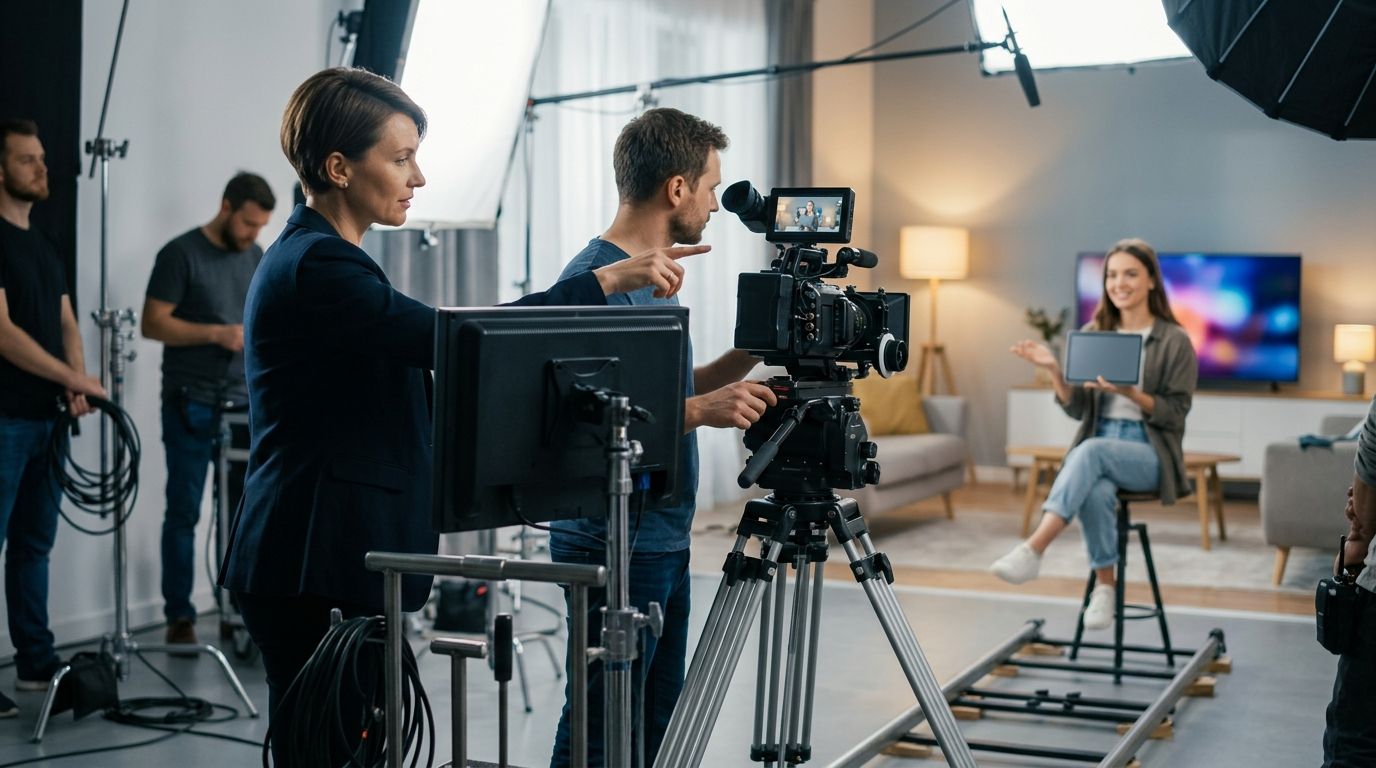
A single shoot day for a consumer tech launch should generate the 90-second hero film, a 15-second teaser, and a 10-second social cutdown - not three separate shoot days. Plan camera setups and B-roll coverage with all three lengths in mind from the start.
- Build a shot list that separates "must-have for the 10-second cut" from "nice-to-have for the long film"
- Capture at least one clean, uncluttered background plate for platform-specific crops
- Get 3-5 seconds of extra handle on every take so editors can trim without reshoots
- Record a wide, a medium, and a macro on every hero product beat
- Log takes on set so post doesn't have to scrub raw footage to find the good ones
Handle spec accuracy and legal review before publish
Consumer tech claims get fact-checked fast - by reviewers, by competitors, and now by AI assistants pulling spec comparisons into an answer. A wrong number in a caption is a correction post waiting to happen.
- Route every on-screen spec claim through the same team that owns the product page
- Keep a version-controlled claims doc so edits don't drift from the approved copy
- Confirm any "first," "fastest," or "only" claim against a source before it airs
- Build in one legal review pass before the final export, not after upload
Localize for global launch markets
Consumer tech launches rarely stay domestic. If the brand ships to more than one region, plan dubbing, subtitles, and on-screen text localization at the script stage, not as an afterthought once the English cut is locked.
- Flag any on-screen text (specs, callouts) that will need to be re-rendered per language
- Decide subtitle vs. dub per market based on where the product actually sells
- Keep voiceover pacing loose enough to accommodate longer translated scripts
- Test one localized cut internally before committing to the full language list
Speed up post with AI-assisted tools, then let a producer sign off
AI-assisted rendering and generative B-roll can cut turnaround time on motion graphics, background plates, and rough-cut iteration. It does not replace a producer reviewing the final cut for continuity, brand tone, and accuracy - the machine doesn't know what the legal team approved.
- Use AI-generated B-roll for environments that don't require the physical product
- Keep every shot with the actual device or interface as real, reviewed footage
- Run AI-assisted rough cuts through the same producer approval gate as traditional footage
- Check the current guide on how much AI-assisted video production costs before scoping the budget
Get your gap mapped first
Send your product page or launch brief and get a clear gap read back.
Track which cuts perform once live
Once the launch film and its cutdowns are live, watch which length and which claim actually holds attention. A consumer tech audience skips fast - the first three seconds decide whether the rest gets watched.
- Compare completion rate across the 90-second, 15-second, and 10-second versions
- Note which platform each cut performs on and stop forcing one length everywhere
- Retire any claim-driven cut that underperforms and re-cut around a different feature
- Feed the winning hook back into the next product cycle's script
Comparison: production approaches for consumer tech launches
| Option | Best for | Key limitation |
|---|---|---|
| In-house team with stock B-roll | Small feature updates, low-stakes announcements | Rarely has the camera gear or producer time for true product macro shots |
| Freelance videographer, single shoot | One-off launch video with a fixed budget | No modular cutdown planning - usually one length, one platform |
| Full production studio (traditional) | Flagship launches needing broadcast-quality footage | Slower turnaround, higher cost per cutdown if not planned modularly |
| AI-assisted production studio | Brands needing fast iteration across multiple markets and lengths | Still needs a producer review gate - raw AI output isn't broadcast-ready alone |
Production Soup runs the fourth row: AI-assisted speed on B-roll and motion graphics, with a senior producer reviewing every cut before it ships, paired with commercial video production discipline built for consumer tech's demo-first buyer.
Common mistakes consumer tech brands make in video production
- Leading with lifestyle, not function. A gorgeous sunset shot with the device in frame answers zero buyer questions - the demo shot is the one that converts.
- Shooting one length and cropping it badly. A 90-second hero film force-cropped into a 10-second square cutdown loses the hook in the first three seconds.
- Skipping the legal pass on spec claims. "Fastest charging on the market" without a cleared source turns into a correction thread within days of launch.
- Treating localization as subtitles only. On-screen spec callouts in the wrong units or wrong language undercut trust faster than a missing dub.
- No producer sign-off on AI-assisted cuts. Raw generative footage without a review gate reads as off-brand or uncanny to a tech-literate audience.
FAQ
What does commercial video production for consumer tech actually include in 2026?
It covers the launch film, platform cutdowns (teaser, social, spec explainer), and the demo footage that shows the product functioning, not just styled B-roll. In 2026 most consumer tech briefs also require localized versions for global launch markets.
How long should a consumer tech launch video be?
Plan for a 90-second hero film plus a 15-second teaser and a 10-second social cutdown from the same shoot. Each length needs its own hook - a straight crop of the long version usually underperforms.
Is AI-generated video good enough for a consumer tech launch?
AI-assisted rendering works well for B-roll, environments, and rough motion graphics, but the actual product footage should stay real and producer-reviewed. A review gate before publish catches continuity and accuracy issues generative tools miss.
How much does AI video production cost compared to traditional shoots?
Cost depends on scope, but AI-assisted workflows tend to reduce wasted rounds and speed up testing rather than eliminate cost entirely. Check the full cost breakdown before scoping a budget.
Do consumer tech brands need separate videos for each region?
If the product ships to more than one market, yes - dubbing, subtitles, and re-rendered on-screen specs should be planned at the script stage, not bolted on after the English cut locks.
What's the biggest mistake in consumer tech video scripts?
Leading with mood and lifestyle instead of function. Buyers researching tech want to see the device work before they care how it looks in a scene.
Who should review video claims before a consumer tech launch airs?
The same team that owns the product page copy should sign off on every on-screen spec claim, with one legal review pass before final export.
Can one shoot day produce all the launch cutdowns a consumer tech brand needs?
Yes, if the shot list is planned modularly from the start - separating must-have shots for the 10-second cut from nice-to-have shots for the long film avoids a second shoot day.
One last thing
The cutdown that gets skipped most often - the 10-second one - is usually the one that decides whether a buyer watches the full 90-second film at all. Plan the short cut first, not last, and the rest of the edit gets easier.