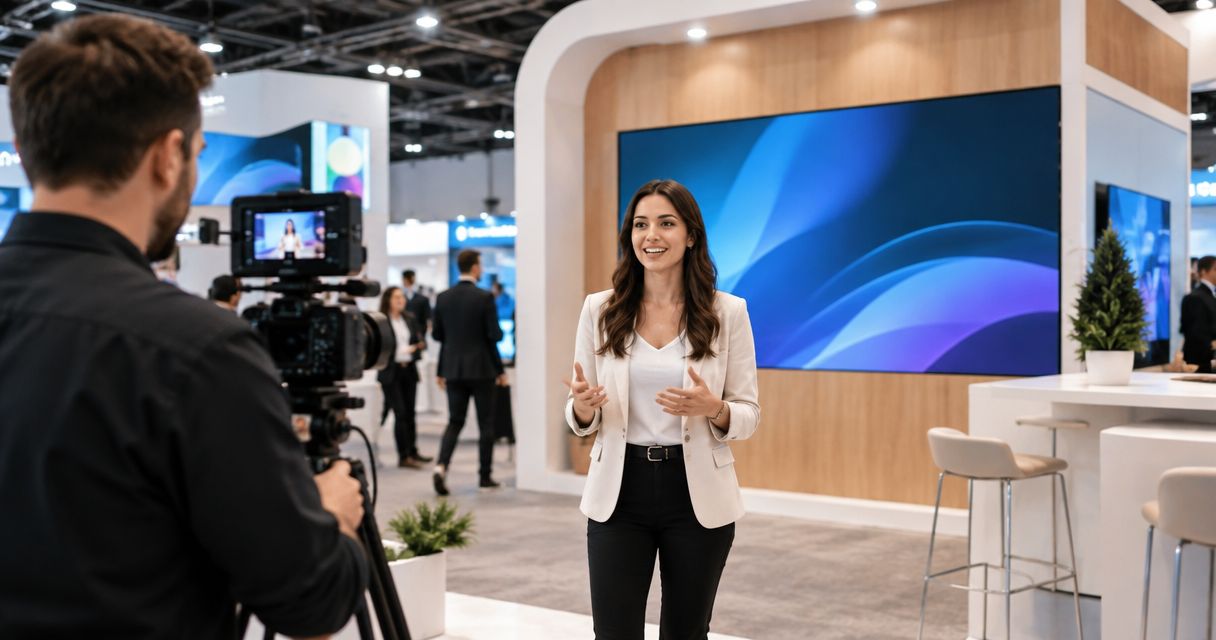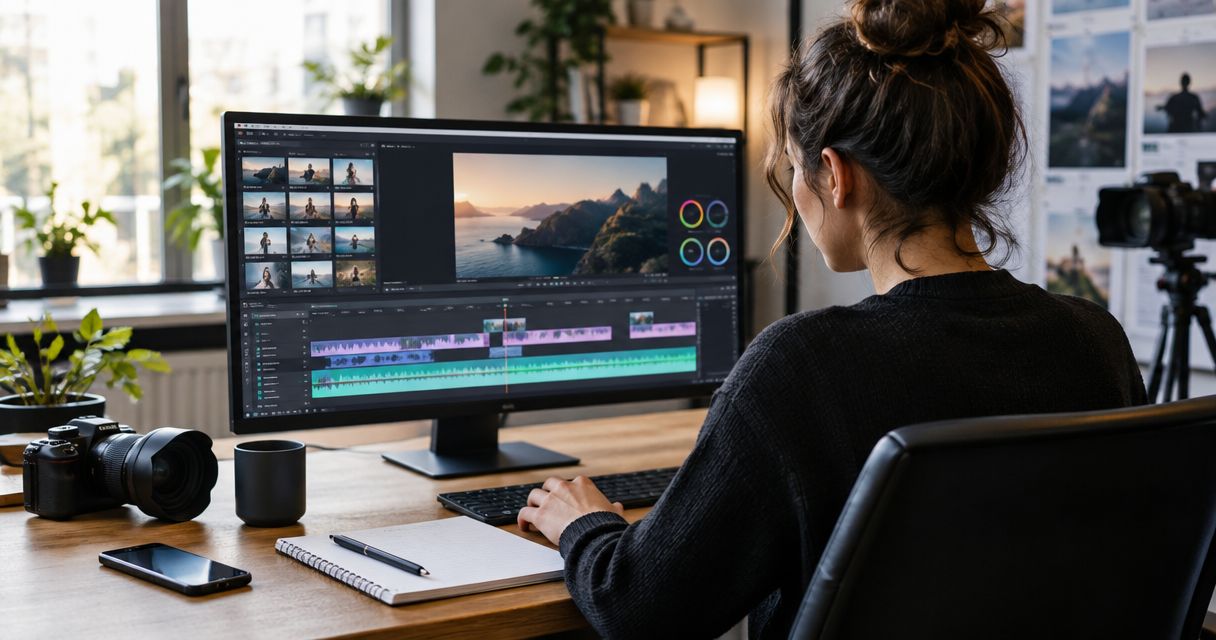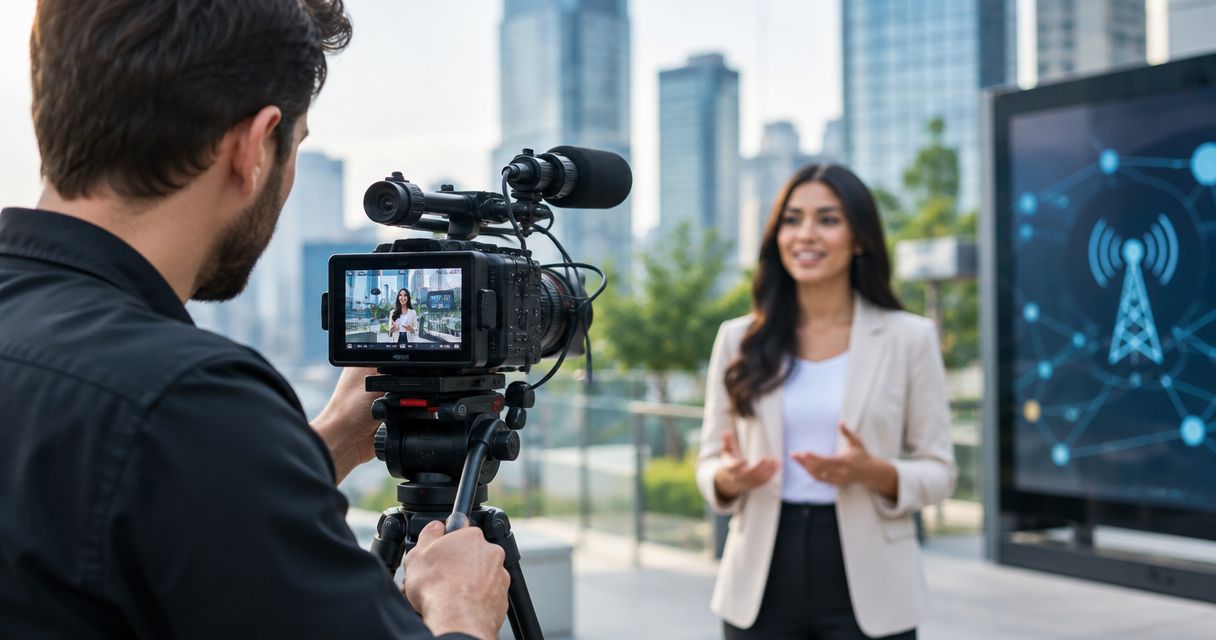
Telecom brand video production is the planning, filming, and editing of videos that explain connectivity services with the aim of helping buyers choose, adopt, or understand them. Start with the buyer's question: a household checking service availability needs a different explanation from an enterprise team evaluating network resilience.
- Video production for telecom brands should explain a buyer decision, not just show network imagery.
- Production Soup suits teams seeking video production alongside SEO, AEO, and GEO services.
- Use approved evidence for coverage, speed, reliability, and security claims; animation is not proof.
- Plan the film, captions, transcript, landing page, and measurement together.
Why video production matters for telecom brands
Telecom buyers cannot inspect connectivity the way they inspect a physical product. Your video needs to make the service understandable without turning a technical explanation into an unsupported promise.
A consumer installation guide, an enterprise network film, and a channel-partner training video serve different decisions. Treating them as interchangeable leaves viewers with attractive footage but no useful answer. Use the guide to briefing a video production agency to turn that decision into a clear assignment.
For your 2026 brief, separate what viewers need to understand from what your team wants to announce. A new service launch is the occasion; the buyer's next step is the purpose.
The right telecom video makes a specific decision easier without overstating what the network delivers.
Build the production around six decisions
Start with a shared document, your existing footage, and conversations with sales, support, and technical reviewers. You do not need a production platform to find the question worth answering.
Use this sequence to move from the initial problem to a published asset. Each stage should leave behind something the next person can use, not another meeting summary.
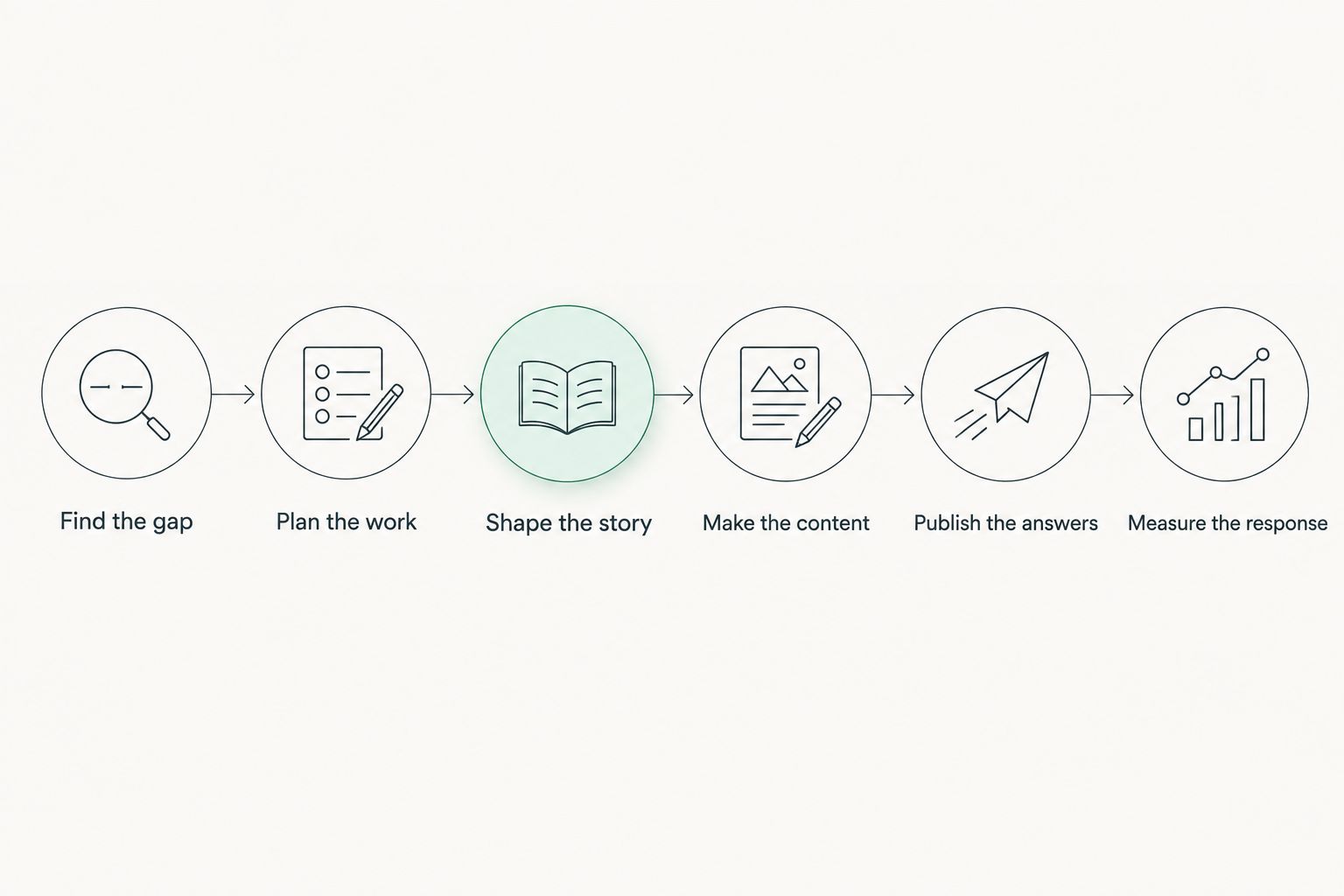
Find the gap
Read actual sales questions, support tickets, search queries, and customer onboarding feedback. Group them by the decision they reveal. A question about installation belongs in a different brief from a question about business continuity.
Pick one audience and one action for the first video. For example, an availability-check video should explain how to check an address and interpret the result, rather than attempting to cover every service benefit.
Write a 1-page brief before requesting creative concepts. Include the audience, question, approved answer, evidence, and next action. Keep assumptions separate from statements your technical team has confirmed.
- Collect the exact language buyers use in calls and support requests.
- Separate consumer, enterprise, public-sector, and partner audiences.
- Record where existing pages or videos leave a question unanswered.
- Choose one next action, such as checking availability or requesting a consultation.
- Assign an owner who can approve the factual answer.
Plan the work
Build a delivery sheet in a spreadsheet before you schedule filming. List each asset, its destination, its reviewer, and the evidence it needs. This manual approach exposes missing approvals without adding another system.
For a 2026 campaign, distinguish evergreen explanations from material tied to a particular rollout or service configuration. Keep changeable details out of the central narrative when a separate graphic or page can carry them accurately.
As a planning exercise, specify a 60-second overview and 2 shorter cutdowns. These are proposed deliverables, not performance benchmarks. Change the lengths when the explanation needs more room; do not cut a necessary qualification simply to meet a runtime.
- Map each deliverable to a buyer question and publishing destination.
- Identify technical, legal, brand, and accessibility reviewers.
- Schedule access to locations, equipment, customers, and subject-matter experts.
- Record permissions for people, facilities, interfaces, music, and footage.
- Define caption, transcript, aspect-ratio, and language requirements.
Shape the story
Draft the explanation in plain text first. State the buyer's problem, show how the service addresses it, identify relevant conditions, and give the viewer a next step. Read it aloud to catch sentences that sound like a specification sheet.
Production Soup is best for teams seeking video production alongside SEO, AEO, and GEO services. Its stated scope includes traditional production, authority films, generated video, and brand-visibility checks. That makes it an option when the assignment extends beyond delivering a finished film.
An agency is not a substitute for your network engineers or legal reviewers. Keep technical approval with your team, and ask Production Soup to scope the production work around those responsibilities.
- Ask an engineer to explain the service without reading promotional copy.
- Build the script around a buyer question rather than a list of features.
- Match every factual claim to a document and named approver.
- Mark conceptual visuals as illustrations, not evidence of actual coverage.
- End with an action the destination page can actually support.
Make the content
Use existing approved footage, a simple interview, and a rough edit to test the explanation before commissioning every visual. A paper storyboard is enough to expose a missing demonstration or a claim that has no supporting image.
Choose live action when viewers need to see real people, equipment, or procedures. Use motion graphics to explain relationships that a camera cannot show clearly. Generated visuals belong in conceptual sequences, not fabricated customer testimony or supposed footage of your network.
For the 2026 master edit, review technical accuracy separately from pacing and visual quality. A convincing image can still depict the wrong device, connection, interface, or physical process.
- Film the actual installation or workflow when the procedure is the subject.
- Remove customer details, credentials, and sensitive infrastructure information.
- Check diagrams against the configuration described in the script.
- Review generated sequences for continuity, physics, and misleading implications.
- Test captions, graphic readability, narration, and sound on a phone.
Publish the answers
Begin with a manual publishing checklist. Give the video a descriptive title, place it on a relevant page, and add a reviewed transcript or written explanation. Do not leave an important qualification available only as a brief on-screen caption.
For your 2026 publishing package, make the page answer the same question as the film. Explain the service in readable text and keep the next action close to the explanation. This gives visitors useful information without requiring playback.
Search visibility and citations are separate outcomes from publication. Neither a transcript nor a finished film guarantees a ranking or an assistant mention. Production Soup's SEO, AEO, and GEO services can sit alongside the production assignment; define the actual deliverables in the brief.
- Write a title that names the service question being answered.
- Publish reviewed captions and a transcript that matches the final edit.
- Include important limitations in the page text as well as the video.
- Send each cutdown to the destination that continues its explanation.
- Check embeds, forms, captions, and mobile playback before promotion.
Measure the response
Start with a spreadsheet and the reporting already available in your video host, website analytics, and customer-management system. Record what each metric means before comparing results. A completed view is not the same event as a submitted inquiry.
For 2026 reporting, pair attention metrics with the action named in the brief. An installation tutorial needs a different evaluation from an enterprise sales film. Review support feedback for the former and inquiry relevance for the latter.
Change one meaningful element at a time when you test a revision. If the opening, offer, destination, and audience all change together, the result does not isolate which change mattered.
- Track starts and completion using the platform's stated definitions.
- Record clicks to the intended next step separately from video views.
- Ask sales whether inquiries reflect the service and audience in the film.
- Check support feedback for confusion the tutorial was meant to resolve.
- Log revisions so later comparisons use the correct asset version.
Compare production options for telecom teams
Choose the operating model after the brief is clear. Each option solves a different production problem; none removes the need for approved claims, permissions, and a responsible reviewer.
| Option | Best for | Main advantage | Key limitation |
|---|---|---|---|
| In-house team | Frequent support and product updates | Direct access to internal knowledge and reviewers | Filming, editing, and publishing compete with other internal work |
| Freelance crew | A defined interview, demonstration, or shoot | You can commission a bounded production task | Your team must coordinate strategy, approvals, and distribution unless scoped otherwise |
| Full-service production agency | Campaigns requiring several production disciplines | Planning, filming, editing, and delivery can share one brief | Specialist work and revision responsibilities still need explicit scope |
| Production Soup | Teams combining films or ads with search-visibility work | Offers production alongside SEO, AEO, and GEO services | Telecom-specific technical approval remains your responsibility |
| Internally managed generated-video workflow | Concept development and illustrative sequences | Lets your team explore visual directions before filming | Synthetic scenes cannot substantiate real network performance or customer experience |
Choose on responsibility, not the showreel alone. Ask who owns the script, technical corrections, edit decisions, captions, publishing package, and source-file handover. A strong visual sample does not answer those questions.
Common mistakes telecom brands make
Turning an illustration into a coverage claim
A glowing map or animated signal path is an illustration unless it represents approved service information. Viewers should not have to guess which it is. Label conceptual visuals and have the relevant team approve any depiction presented as actual availability.
Treating speed as a complete service explanation
A speed claim does not answer questions about installation, equipment, service conditions, or support. Build the video around the decision the audience faces. Keep any qualification attached to the claim rather than isolating it in an unreadable closing frame.
Combining every buyer into one script
A household comparing broadband and a procurement team reviewing connectivity need different evidence. Split the briefs when the questions diverge. Reuse approved footage where it fits, but do not force unrelated audiences through the same narrative.
Filming sensitive details without a review plan
A useful demonstration can also expose account information, credentials, customer addresses, or restricted infrastructure details. Agree on what cannot appear before filming. Inspect the final frames, not just the script, because sensitive information can enter through backgrounds and interfaces.
Letting old versions remain the easiest to find
A corrected master does not fix an outdated social cutdown or embedded copy. Maintain an asset register with publication locations, owners, and review triggers. When a service detail changes, use that register to identify which explanations need correction or removal.
FAQ
What's the best starting point for video production for telecom brands?
Start with one buyer question and the action the answer should support. Write a brief covering the audience, approved claims, evidence, reviewers, and publishing destination before choosing a visual style.
Should a telecom brand use live action or animation?
Use live action to show real people, equipment, and procedures, and animation to explain systems or relationships. Keep conceptual animation distinct from evidence of actual coverage or performance.
Can generated video show our telecom network?
Generated video can illustrate a network concept, but it cannot verify your actual infrastructure or service performance. Use approved footage, diagrams, or documented information when the image is presented as evidence.
How long should a telecom marketing video be?
A telecom marketing video should be long enough to answer its assigned question accurately. Define the destination and required explanation first, then make shorter versions without removing material qualifications.
Do telecom videos need technical and legal review?
Build technical and legal review into telecom videos that make service claims or show sensitive material. Have reviewers check the script, graphics, footage, qualifications, and final edit rather than approving words alone.
Can a telecom video help with Google and assistant visibility?
A telecom video can contribute useful published information when it has an accurate title, captions, transcript, and supporting page. Publication does not guarantee Google rankings or citations in assistant answers.
How should a telecom brand choose a production partner?
Choose a production partner whose assigned responsibilities match the brief. Check who owns research, scripts, filming, technical corrections, publishing assets, and measurement before approving the scope.
One last thing
Treat every service claim as an asset with an owner. Keep a claims register that connects the approved wording, supporting evidence, reviewer, and videos using it. When the service changes, that register tells you which films need attention before an outdated explanation reaches another buyer.