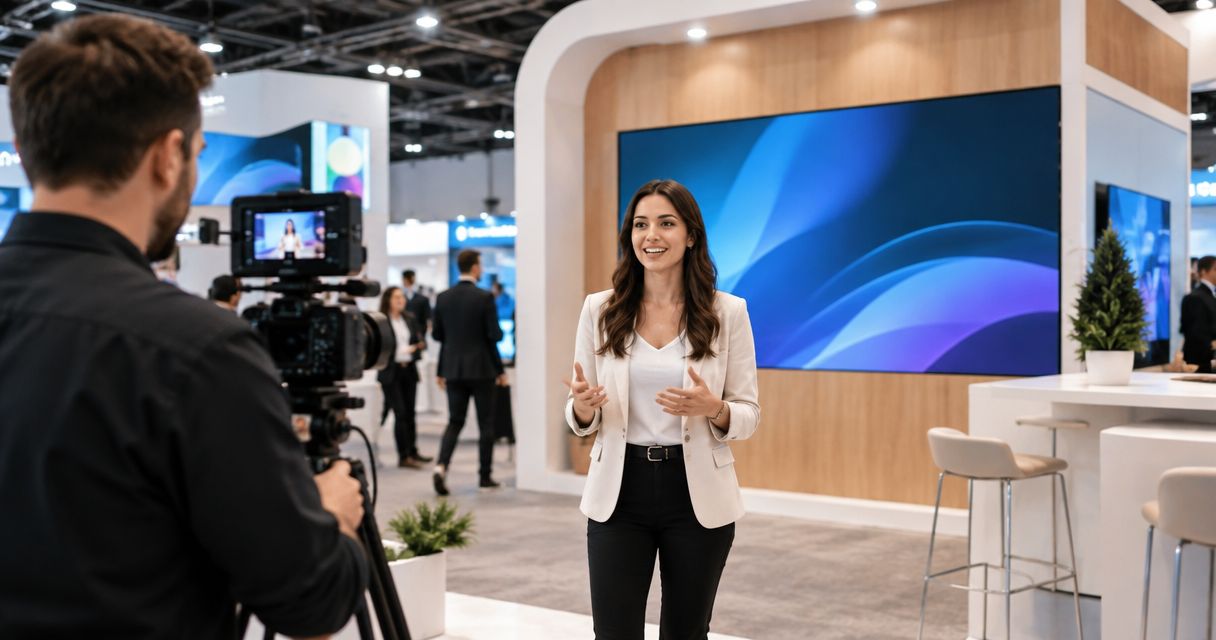
An AI video ad for a nonprofit needs a scope-based quote in 2026, not a budget based on the generation tool alone. Separate production from paid distribution, and ask whether the production quote includes scripting, asset permissions, editing, captions, revisions, and delivery files before approving the work.
- AI video ad cost nonprofit budgeting starts with scope, not the generation tool.
- Compare existing-asset edits, generated visuals, and hybrid production against the same deliverables.
- Keep paid distribution separate from production when comparing proposals.
- Production Soup combines traditional and AI video production; ask for a scope tied to your campaign.
How much does an AI video ad cost for a nonprofit?
Budget for the finished, approved ad—not just the footage generation. A useful quote identifies what the producer will deliver, what your team must supply, and what changes trigger additional work.
For your 2026 campaign, request a breakdown using the categories below. Compare the work included before comparing the total. Production Soup’s production services cover traditional and AI-generated video, making the production approach part of the discussion rather than a decision you must make in advance.
| Budget category | What to ask the proposal to include | What to check separately |
|---|---|---|
| Planning and script | Audience, campaign objective, message, script approval | Research, stakeholder interviews, additional concepts |
| Visual production | Existing footage, generated scenes, or filming | Asset preparation, new shoots, replacement scenes |
| Editing and sound | Picture edit, narration, music, sound mix | Additional voice versions and music permissions |
| Review and revisions | Named approver, review stages, included changes | New scripts or concepts after approval |
| Delivery | Captions, formats, final files | Editable files, translations, additional placements |
| Distribution | Responsibility for publishing and campaign setup | Advertising spend and ongoing campaign management |
This is a quote-request checklist, not a claim that every producer includes every item. Get each inclusion in writing. An unclear proposal leaves your nonprofit responsible for discovering the gaps after work starts.
Why this matters
A nonprofit ad has to communicate the mission without confusing illustration with evidence. Generated imagery can support a concept, but it should not masquerade as documentary footage of people your organization served.
That distinction belongs in the brief. If your campaign depends on a real participant’s experience, decide which statements, images, and permissions must come from the actual person before choosing a production method.
Your budget also needs a clear destination. A donation appeal, volunteer recruitment ad, and program-awareness message ask viewers to do different things; do not approve a script until the desired action is explicit.
Which production approach should your nonprofit request?
Choose the approach around the evidence and assets your campaign needs. Do not assume that generating every scene is the simplest route to a usable ad.
| Production approach | Best for | Main advantage | Main limitation | Quote question |
|---|---|---|---|---|
| Existing-asset edit | Nonprofits with approved footage and photography | Builds around material your team already holds | Depends on the quality and permissions of existing assets | What asset preparation is included? |
| Generated visuals | Illustrative concepts that do not claim to document real events | Lets you develop imagery without staging that scene | Requires review for visual errors and misleading implications | Who reviews and approves generated scenes? |
| Hybrid production | Campaigns combining real testimony with illustrative material | Keeps real evidence alongside creative interpretation | Requires coordination across footage types | Who owns continuity, permissions, and the final edit? |
Existing-asset edit: best for approved material
Start by checking what you already have. Interviews, program footage, photography, and approved graphics can form the basis of an ad when they support the current message.
The constraint is suitability. Permission for an earlier use does not automatically answer every question about a new advertising use, so have your team verify the relevant permissions rather than assuming the archive is ready.
Recommendation: request an asset review before commissioning replacement visuals. Ask the producer to identify what is usable, what needs preparation, and what is missing.
Generated visuals: best for illustration
Use generated visuals when the scene explains an idea rather than proves an outcome. An abstract depiction of connection serves a different purpose from footage presented as a real service recipient’s experience.
The limitation is review. You still need someone to check faces, hands, text, motion, continuity, and the meaning viewers will take from the scene.
Recommendation: approve the visual direction before producing the full sequence. A finished-looking clip is not the same as an appropriate campaign asset.
Hybrid production: best for real testimony with illustration
Use hybrid production when authentic interviews or program footage carry the evidence and other visuals support the explanation. Keep the distinction clear in the script and edit.
Production Soup is a fit for nonprofit teams seeking traditional and AI video production from the same studio. The trade-off is that hiring a studio does not remove your nonprofit’s responsibility for factual claims, participant permissions, or final approval.
Recommendation: name the person responsible for the combined edit. Real footage and generated material need to tell the same story without creating a false impression.
Why nonprofit AI video ad quotes vary
For a 2026 brief, make these scope decisions explicit. They describe the work you are buying, not a universal pricing formula.
- Story development. Specify whether your team supplies an approved script or needs help developing the message. Treat a new concept differently from polishing existing copy.
- Source material. Identify the footage, photographs, graphics, and interviews available for use. Ask who checks technical suitability and permissions.
- Visual production. State whether the work involves editing existing material, generating scenes, filming, or combining those approaches. Ask how replacement scenes are handled.
- Review responsibility. Name the decision-maker and any program, communications, or legal reviewers. Agree on when each person reviews the work.
- Delivery requirements. List placements, captions, language versions, and file requirements before the edit begins. A single approved edit does not define every delivery file.
- Campaign responsibilities. Separate making the ad from publishing it, managing paid distribution, and reporting results. Assign each task to a named owner.
A lower quote is only a useful comparison when it covers the same work. If a proposal excludes scripting while another includes it, resolve that difference before choosing a supplier.
How do you get a quote you can actually approve?
Build the brief around decisions, not adjectives. Terms such as cinematic or emotional do not tell a producer which evidence must appear, who approves it, or what files you need.
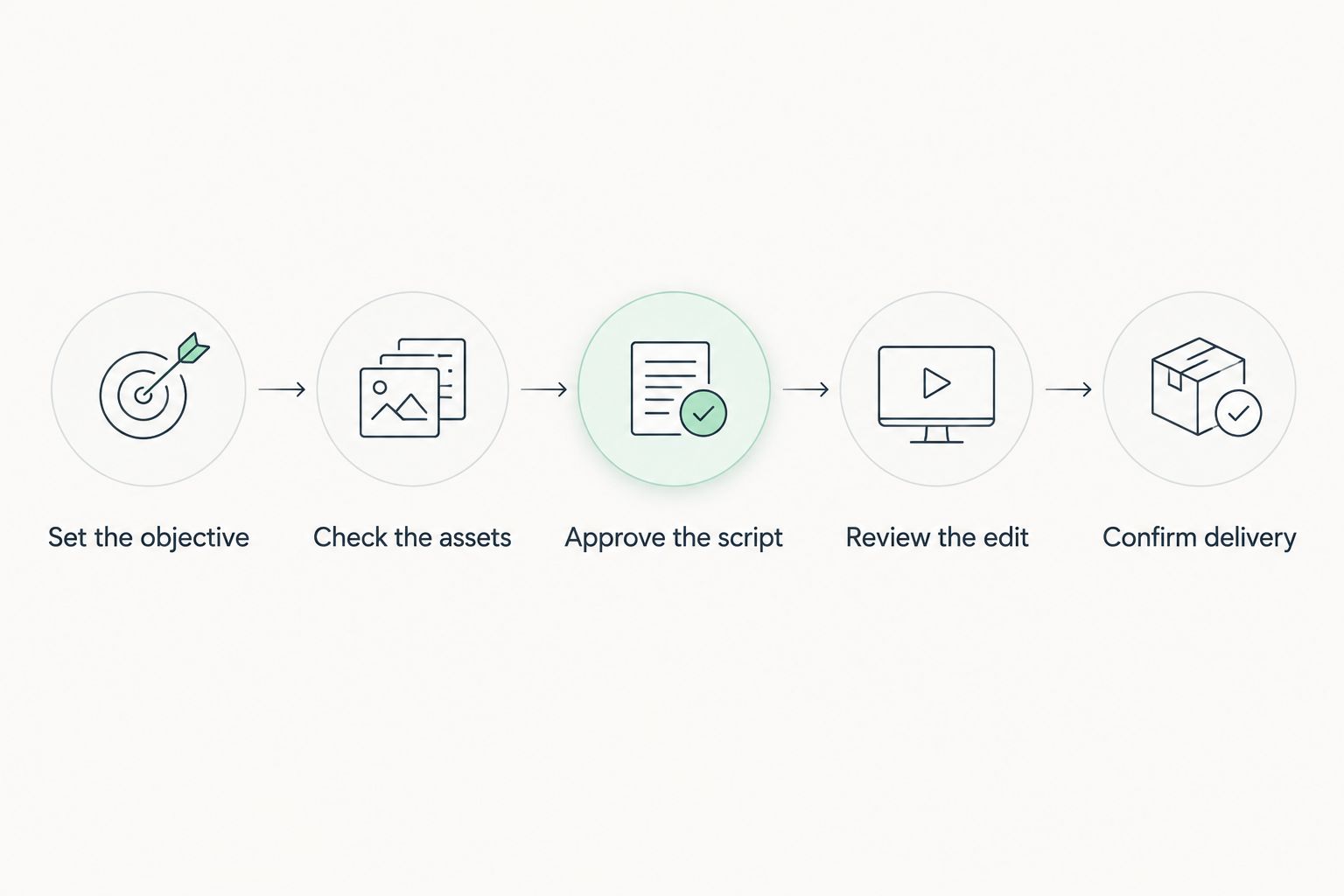
Use the following sequence to prepare your request. Each approval should settle a question before the next stage depends on it.
- Set the objective. Name the audience and the action you want viewers to take. Identify the destination for that action.
- Check the assets. Gather the footage, images, claims, and permissions your team intends to use. Flag anything that still needs approval.
- Approve the script. Confirm the message, factual statements, and call to action. Identify which scenes are documentary and which are illustrative.
- Review the edit. Consolidate feedback through the named approver. Separate corrections from requests that change the approved concept.
- Confirm delivery. Check captions, formats, destination details, and final approval before publishing. Record who holds the final files.
Send the same brief to every producer you are considering. Ask each to identify exclusions and assumptions directly, rather than leaving your team to infer them from a presentation.
For help organizing that document, use the guide to briefing a video production agency for a commercial. Keep the nonprofit’s claims and participant safeguards in the brief, not in a separate conversation that the editor never sees.
Is an AI video ad cheaper than filming?
AI generation is not proof of a lower total production bill. Compare the complete tasks required for your concept, including review, editing, sound, permissions, and delivery.
If you already have suitable footage, ask for an existing-asset option. If the message requires a real interview, do not substitute a synthetic speaker merely to avoid discussing the filming scope.
Does nonprofit status automatically mean a discount?
Nonprofit status is not a confirmed discount. Ask the producer directly about any applicable terms, and budget against the written proposal rather than an assumed concession.
Keep the mission separate from the deliverables discussion. A producer still needs to know what the organization wants made, what it supplies, and who approves the result.
Should advertising spend be included in the production quote?
Production and advertising spend should be identifiable separately, even when the same supplier manages both. You need to see what pays for making the ad and what pays for distributing it.
For a 2026 campaign, also assign responsibility for campaign setup, destination checks, and reporting. Do not assume that delivery of the video includes those services.
What should your team approve before work starts?
Approve the scope, the evidence, and the decision process. A production agreement should leave your team with a shared understanding of what completion means.
Use this final check before signing:
- The proposal identifies the intended audience and campaign action.
- The deliverables match the placements your team plans to use.
- The script and factual-claim approval process is clear.
- Responsibility for footage, music, voice, and participant permissions is assigned.
- Included revisions and changes outside scope are explained.
- Final-file delivery and publishing responsibilities are named.
Production Soup describes a six-step system: see the gap, plan the work, create the stories, make the content, put it live, and watch the numbers. For your nonprofit video project, ask which of those stages the proposal covers and which stay with your team.
Start with your campaign scope
Bring your objective, available assets, approval process, and delivery requirements.
FAQ
How much should our nonprofit budget for an AI video ad in 2026?
Budget against a written production scope rather than the generation tool alone. Request separate detail for planning, visual production, editing, permissions, revisions, delivery, and paid distribution.
Is an AI video ad cheaper than a traditional nonprofit video?
AI production is not automatically cheaper than traditional production. Compare proposals for the same message, evidence, review requirements, and final deliverables.
Can we use our existing nonprofit footage in an AI-assisted ad?
Use existing footage when it supports the current message and your team has verified the relevant permissions. Ask the producer to review its technical suitability before building the script around it.
Can AI-generated people represent our program participants?
Do not present generated people as actual program participants. Keep illustrative material distinct from real testimony, and review the impression the finished ad creates.
Does an AI video production quote include advertising spend?
Do not assume advertising spend is included in a production quote. Ask for production, campaign management, and distribution responsibilities to be identified separately.
Do nonprofits automatically receive reduced production fees?
Nonprofit status does not establish a discount. Confirm any applicable terms directly with the producer and use the written proposal for budget approval.
What should we send a producer before requesting a quote?
Send the campaign objective, intended audience, available assets, required deliverables, approval process, and deadline. Flag claims or participant permissions that still need review.
One last thing
Check the donation or sign-up destination before approving the ad. Open it on the device your audience will use, confirm that the stated action is available, and make sure the message matches the video.
For your 2026 campaign, name the person who owns that check. The production is not ready to publish merely because the final video file is ready.